
What's Happening?
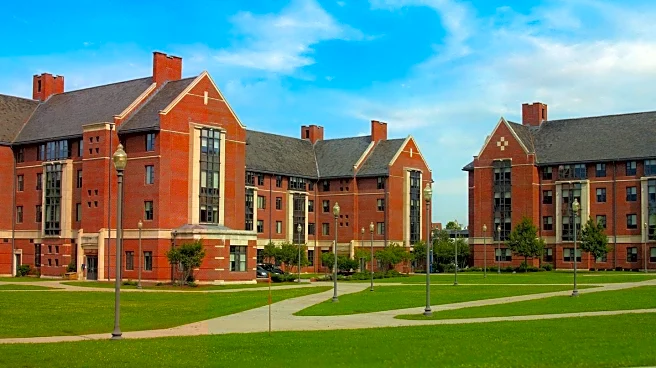
Lake Superior State University has released its 50th annual 'Banished Words List,' a compilation of overused and misused words and phrases. This list, which began in 1976 as a New Year's Eve party idea,
aims to highlight terms that have become clichéd or nonsensical. This year, the list includes words like '6-7,' 'demure,' 'incentivize,' 'perfect,' 'gift/gifted,' 'my bad,' and 'reach out.' The phrase '6-7' has gained particular attention, especially among Gen Z, as a viral trend with unclear meaning. Despite its popularity, many, including dictionary editors, are still trying to decipher its significance. The list is compiled from around 1,400 submissions from across the United States and several other countries. David Travis, the president of Lake Superior State University, notes that social media has contributed to the misuse and misunderstanding of these terms.
Why It's Important?
The annual 'Banished Words List' serves as a cultural barometer, reflecting the evolving language trends influenced by social media and digital communication. It highlights how quickly language can change and how certain phrases can become ubiquitous, often losing their original meaning. This list is significant as it encourages reflection on language use and the impact of digital communication on everyday speech. It also underscores the generational divide in language, with younger generations often adopting and discarding slang at a rapid pace. The list can influence public discourse by prompting discussions about language and communication in the digital age.
What's Next?
As language continues to evolve, it is likely that new words and phrases will emerge, influenced by social media and cultural trends. The 'Banished Words List' will continue to serve as a yearly reflection on these changes, potentially influencing how people perceive and use language. Educational institutions and linguists may use the list to study language trends and their implications on communication. Additionally, the list may inspire similar initiatives in other regions or countries, fostering a global conversation about language use.