

What's Happening?
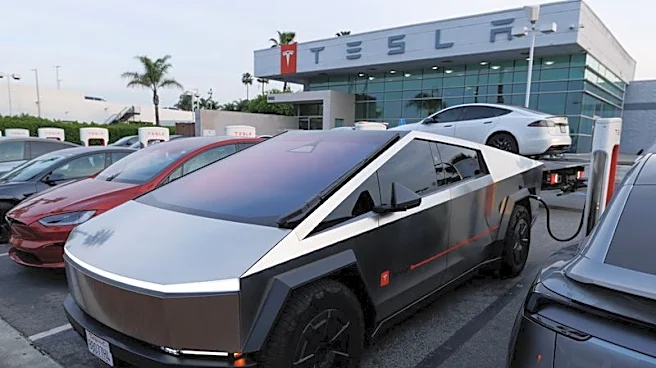
Tesla reported a 16% increase in first-quarter revenue, reaching $22.38 billion, driven by higher automotive sales and a rise in Full Self-Driving (FSD) subscriptions. The company delivered 358,023 electric vehicles globally, slightly below analyst expectations,
but produced 408,386 vehicles. Tesla's automotive revenue rose to $16.2 billion, and its FSD subscriptions grew by 51% year-over-year to 1.28 million. Despite these gains, Tesla's profits remain lower than previous quarters, with net income at $477 million. The company faces challenges from the expiration of the federal tax credit for electric vehicles and ongoing investments in AI and robotics.
Why It's Important?
Tesla's revenue growth underscores the company's ability to capitalize on its core electric vehicle business and expand its subscription services. The increase in FSD subscriptions highlights a shift towards monetizing software and services, which could provide a more stable revenue stream. However, the expiration of the federal tax credit poses a challenge to maintaining sales momentum. Tesla's ongoing investments in AI and robotics indicate a strategic focus on future technologies, which could redefine its business model and market position.
What's Next?
Tesla's transition towards AI and robotics will require significant capital investment, with the company planning to spend $25 billion in 2026. This shift may impact short-term profitability but could position Tesla as a leader in emerging technologies. The company's ability to scale production of its Optimus humanoid robot and expand its robotaxi service will be critical to its long-term success. Investors will closely watch Tesla's progress in these areas and its impact on the company's financial performance.