
What's Happening?
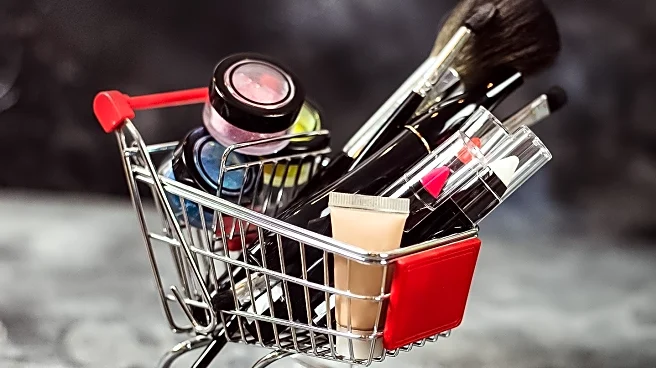
The beauty industry is witnessing a significant shift as men's makeup becomes mainstream, largely driven by Gen Z and social media platforms like TikTok and Instagram. Brands such as Ulta Beauty and Sephora are capitalizing on this trend by integrating men's makeup products into gender-neutral displays. The men's grooming market in the U.S. reached $7.1 billion in 2025, with a notable increase in the use of facial skincare products among Gen Z men. Influencer marketing is playing a crucial role, with brands investing heavily in partnerships to boost engagement and sales online. Additionally, companies like War Paint are using digital education tools, such as QR codes on packaging, to provide tutorials and enhance customer understanding.
Why It's Important?
The mainstream
acceptance of men's makeup represents a lucrative opportunity for the beauty industry, with potential for double-digit growth. This trend reflects broader cultural shifts around masculinity and personal grooming, as more men incorporate cosmetics into their routines. The industry's focus on influencer marketing and digital education is crucial in overcoming barriers such as social stigma and consumer uncertainty. As brands adapt to these changes, they stand to gain from increased sales and market expansion. However, challenges remain, including inflation and the need to educate consumers on product usage.
What's Next?
The beauty industry is likely to continue investing in influencer marketing and digital education to further normalize men's makeup. Retailers may expand their offerings and refine marketing strategies to cater to this growing demographic. As social stigma decreases, more men may adopt makeup as part of their grooming routines, potentially leading to increased market demand. Companies will need to address consumer education and product accessibility to fully capitalize on this trend.
Beyond the Headlines
The rise of men's makeup is part of a broader cultural reset around gender norms and personal grooming. Social media has democratized access to beauty routines, allowing men to explore cosmetics without traditional gatekeepers. This shift is also linked to wellness and optimization culture, where grooming is seen as maintenance rather than vanity. Celebrity endorsements further accelerate adoption, with stars launching their own skincare and makeup brands, influencing consumer behavior.