

What's Happening?
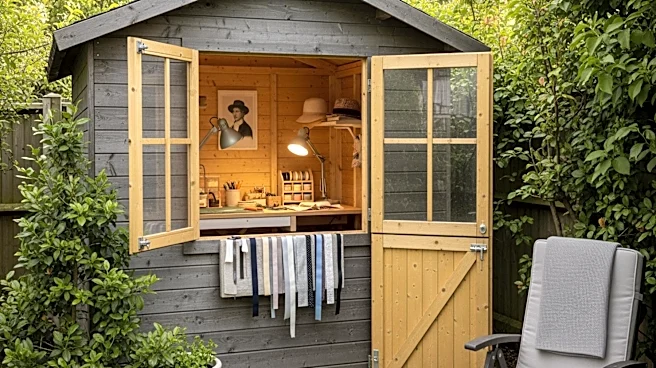
Katie Vale, a milliner from Essex, UK, has adapted to running her business from an 18-square-foot shed in her parents' backyard. Initially a temporary solution due to the COVID-19 pandemic, the arrangement has become a long-term setup. Vale, who previously
operated from a retail space, was forced to close her shop when the pandemic halted events like weddings and horse races, which were her primary markets. The shed, which was once an artist's studio and play den, now serves as her workspace, allowing her to save on rent and childcare costs. Her parents assist with babysitting her daughter, Verity, while she works. Despite the unconventional setup, Vale has maintained her business, shipping custom-made hats globally.
Why It's Important?
This story highlights the resilience and adaptability of small business owners in the face of economic challenges. By utilizing a family resource, Vale has managed to keep her business afloat during a time when many small businesses have struggled or closed. This approach not only reduces overhead costs but also strengthens family bonds, as Vale's parents are actively involved in her business and childcare. The success of her shed-based business underscores the potential for unconventional workspaces to support entrepreneurship, especially in a post-pandemic world where remote and flexible work arrangements are increasingly common.
What's Next?
Vale plans to upgrade her current shed to a larger, 75-square-foot space to accommodate her growing business needs. This expansion indicates her commitment to continuing her business from this location, leveraging the benefits of proximity to family and reduced operational costs. As the demand for her products remains steady, she may explore further business development opportunities, potentially expanding her product line or increasing her online presence to reach a broader audience.