





What's Happening?
Major oil companies are ramping up their investment in high-impact exploration to tackle a projected 300-billion-barrel supply gap by 2050. According to a report by Wood Mackenzie, existing and sanctioned fields are expected to supply only about 700 billion barrels
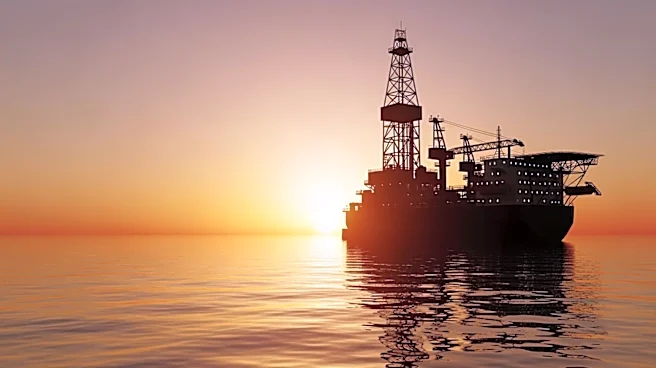
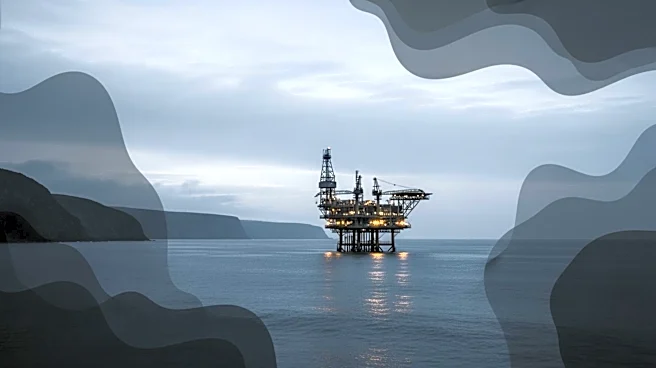
of liquids through mid-century, necessitating new discoveries or field extensions to meet future demand. The report highlights a projected decline in production from current assets by nearly 40% between 2025 and 2040. In response, oil operators are focusing on ultra-deepwater and frontier exploration, targeting large, high-value resources. Companies such as Petrobras, PETRONAS, and Türkiye’s TPAO are leading activities in water depths exceeding 1,500 meters. Despite rising costs, exploration spending has remained steady, averaging $19 billion annually from 2021 to 2025. Successful deepwater discoveries are seen as economically valuable, reinforcing the case for continued investment.
Why It's Important?
The increased exploration efforts by major oil companies are crucial for ensuring long-term energy security and supply stability. As existing oil fields decline, the need for new discoveries becomes imperative to meet global energy demands. The focus on ultra-deepwater exploration reflects the industry's shift towards more challenging environments to access untapped resources. This strategy not only aims to fill the projected supply gap but also supports economic growth by potentially generating significant value from successful discoveries. The involvement of national oil companies in these efforts underscores the global nature of the challenge and the collaborative approach needed to address it. The outcome of these exploration activities will have significant implications for global oil markets, influencing prices and supply dynamics.
What's Next?
The next steps involve continued exploration and drilling campaigns, with 23 high-impact wells identified for 2026. The success of these wells will be critical in determining the viability of ultra-deepwater exploration as a solution to the supply gap. Oil companies will need to balance the risks and costs associated with these ventures against the potential rewards. The industry will also likely see increased collaboration between international and national oil companies to share expertise and resources. Additionally, advancements in technology and exploration techniques will play a vital role in overcoming the challenges of deepwater drilling. Stakeholders, including governments and investors, will closely monitor these developments to assess their impact on energy policies and investment strategies.