
What's Happening?
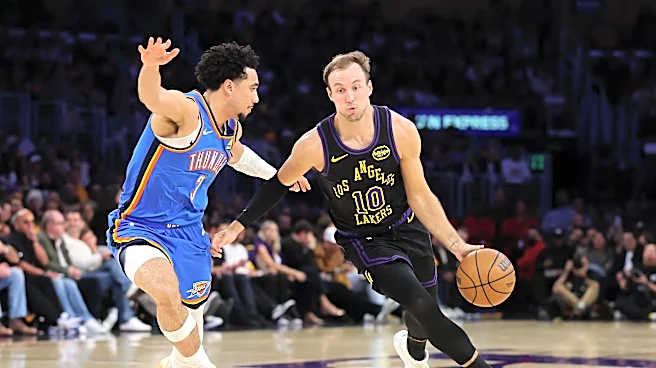
The Los Angeles Lakers are facing a unique challenge as they prepare for the upcoming NBA Draft, where they hold the 25th overall pick. The rise of Name, Image, and Likeness (NIL) deals in college basketball
is influencing players' decisions to remain in college rather than enter the draft. This trend is particularly affecting players who are on the fringes of the first round, as they can potentially earn more through NIL deals than as a late first-round NBA pick. According to The Athletic, players like Florida's Thomas Haugh, UConn's Braylon Mullins, and Duke's Patrick Ngongba, who might have previously declared for the draft, are opting to stay in college. This shift means that the Lakers may find fewer high-caliber players available at their draft position, as many prospects are choosing to continue their college careers.
Why It's Important?
The impact of NIL deals on the NBA Draft is significant, as it alters the traditional pipeline of talent from college to professional basketball. For teams like the Lakers, this means that the pool of available talent at their draft position may be diminished, potentially affecting their ability to secure promising new players. This development could lead to strategic adjustments in how NBA teams approach scouting and drafting, as they may need to consider the financial incentives that college players face. Additionally, the trend highlights the growing financial power of college athletics, which could lead to broader changes in how college sports are structured and how athletes make career decisions.
What's Next?
As the NBA Draft approaches, the Lakers and other teams will need to adapt to the changing landscape of player availability. This may involve placing greater emphasis on scouting international players or those from less prominent college programs who are less influenced by NIL deals. Additionally, the NBA may need to consider adjustments to its draft and salary structures to remain competitive with the financial opportunities available to college athletes. The ongoing evolution of NIL deals will likely continue to shape the dynamics of college and professional basketball in the coming years.