

What's Happening?
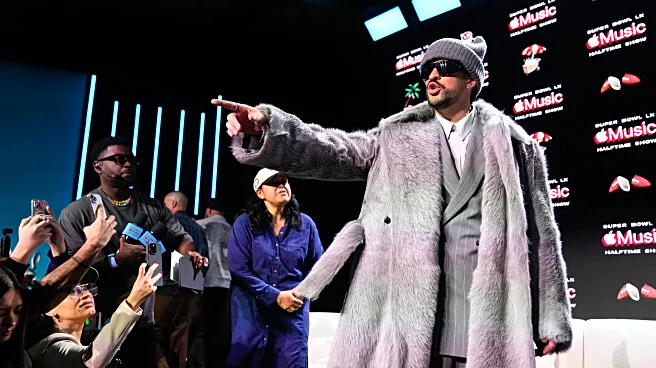
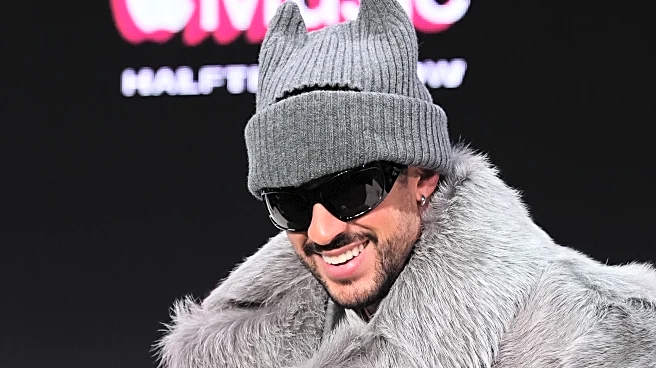
Bad Bunny, a prominent reggaeton artist, has retracted a previous statement suggesting that fans should learn Spanish before his Super Bowl halftime performance. Initially, he made the comment during an appearance on 'Saturday Night Live,' humorously advising critics to learn Spanish within four months. However, at a recent event in San Francisco, he clarified that learning Spanish is not necessary, and fans could instead learn to dance. Bad Bunny, whose real name is Benito Antonio Martínez Ocasio, has been Spotify's most-streamed artist multiple times and is set to perform at the Super Bowl. His decision to perform in Puerto Rico rather than the U.S. during his tour was influenced by concerns over ICE raids. The artist has faced both praise
and criticism for his political statements, including comments made at the Grammys.
Why It's Important?
Bad Bunny's clarification is significant as it highlights the intersection of entertainment and cultural identity. His initial comment and subsequent retraction underscore the broader conversation about language and cultural representation in mainstream media. As a global artist with a substantial following, his actions and statements can influence public discourse on cultural inclusivity. Additionally, his decision to avoid U.S. performances due to immigration enforcement concerns reflects ongoing tensions surrounding immigration policies under President Trump's administration. This situation illustrates the challenges artists face when navigating political landscapes while maintaining their cultural roots.
What's Next?
As Bad Bunny prepares for his Super Bowl performance, it remains to be seen how his statements and actions will influence his reception among diverse audiences. The performance could serve as a platform for further cultural and political expression, potentially sparking discussions on language and identity in the entertainment industry. Stakeholders, including fans, media, and political figures, may respond differently based on their perspectives on cultural representation and immigration policies. The outcome of his performance and any statements made during the event could have lasting impacts on his career and public perception.