






What's Happening?
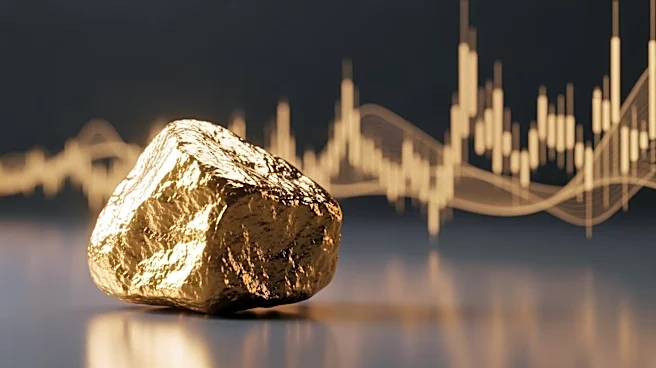
Deutsche Bank has projected that gold prices could reach $8,000 per ounce by 2031, as reported by Yahoo Finance. This prediction is based on the increasing trend of central banks, particularly in countries like China, Russia, India, and Turkey, stockpiling
gold while reducing their U.S. dollar reserves. The move is seen as a strategy to achieve independence from Western trade sanctions. The World Gold Council's survey indicates that 76% of central banks plan to increase their gold reserves in the next five years. This shift is driven by the desire to hedge against interest rates, inflation, and geopolitical instability.
Why It's Important?
The potential rise in gold prices to $8,000 per ounce could have significant implications for global financial markets and economies. As central banks continue to increase their gold reserves, the demand for gold is expected to rise, potentially leading to higher prices. This trend could impact the U.S. dollar's status as the world's primary reserve currency, as countries seek alternatives to mitigate the effects of sanctions and economic pressures. Investors and financial institutions may need to reassess their portfolios to include more gold, given its potential as a stable store of value amid economic uncertainties.
What's Next?
As central banks continue to diversify their reserves away from the U.S. dollar, the demand for gold is likely to remain strong. This could lead to further increases in gold prices, attracting more investors to the precious metal. Financial markets may experience shifts as investors adjust their strategies to capitalize on the rising value of gold. Additionally, geopolitical developments and economic policies will play a crucial role in shaping the future of gold prices. Stakeholders in the financial and mining sectors will need to stay informed and agile to navigate these changes effectively.