






What's Happening?
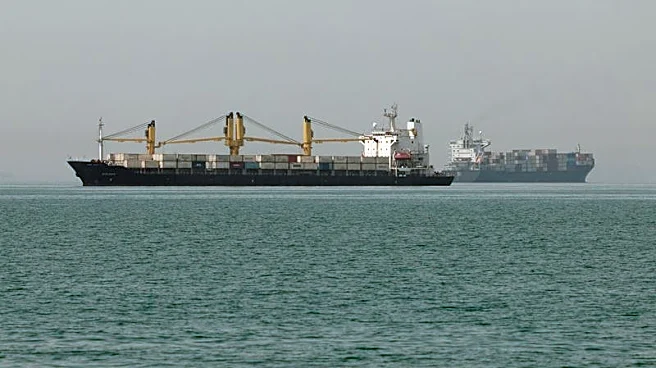
Gold prices have risen as weaker U.S. GDP data and a softer dollar offset inflation pressures linked to geopolitical tensions in the Strait of Hormuz. The U.S. first-quarter GDP was revised down to a 1.6% annualized growth rate, while inflation remains
above the Federal Reserve's target. The geopolitical situation in the Strait of Hormuz, a critical chokepoint for global oil shipments, continues to influence market dynamics. Discussions are underway for a 60-day framework to extend a ceasefire and reopen shipping lanes, but recent skirmishes have kept risk premiums high.
Why It's Important?
The rise in gold prices reflects investor sentiment amid economic uncertainty and geopolitical risks. Gold is often seen as a safe-haven asset during times of economic instability and geopolitical tension. The revised GDP figures suggest a slowing U.S. economy, which could influence Federal Reserve policy decisions. The situation in the Strait of Hormuz affects global oil prices, which in turn impact inflation and economic growth. These factors combined create a complex environment for investors, influencing decisions in commodities and currency markets.
What's Next?
Market participants will closely monitor developments in the Strait of Hormuz and any potential agreements that could ease tensions. The Federal Reserve's response to the economic data will also be critical, as it could affect interest rates and monetary policy. Investors will watch for further economic indicators that might signal changes in growth or inflation trends. The interplay between geopolitical events and economic data will continue to drive market volatility, particularly in commodities like gold and oil.