




What's Happening?
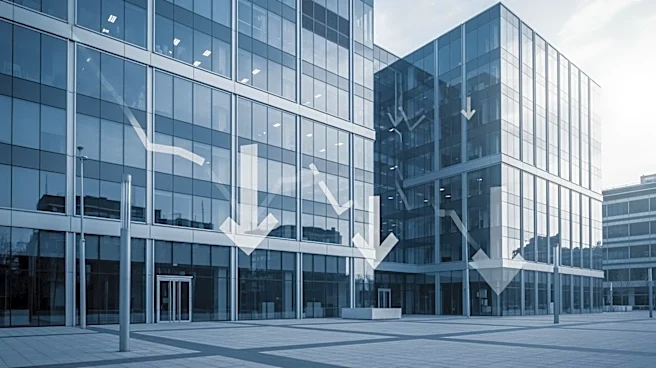
The U.S. office market is experiencing a significant downturn, with distressed properties in cities such as Denver, Chicago, and Washington, DC being sold at substantial discounts, sometimes over 90% below their previous values. This trend is largely
attributed to the persistent impact of remote work and elevated interest rates, which have diminished demand for office spaces. While prime office locations in New York City and San Francisco remain relatively stable, many other areas are seeing a sharp decline in property values. The situation has led to a surge in office-to-residential conversions, with over 90,000 units currently in development across the country. Developers are taking advantage of low purchase prices to justify costly renovations, transforming outdated office spaces into apartments and other alternative uses.
Why It's Important?
The decline in office property values highlights a significant shift in the commercial real estate sector, driven by changes in work patterns and economic conditions. This trend poses challenges for landlords and lenders who have invested heavily in office spaces, expecting a rebound in demand. The widespread markdowns also present opportunities for investors to acquire properties at bargain prices and repurpose them for new uses, such as residential units or urban farms. This shift could lead to a transformation in urban landscapes, as more office buildings are converted to meet the growing demand for housing. Additionally, the trend may influence future real estate investment strategies and urban planning policies.
What's Next?
As the market continues to adjust, more distressed office properties are expected to be sold at discounted prices, potentially leading to further conversions and redevelopment projects. Investors and developers will likely continue to explore innovative uses for these properties, driven by economic incentives and changing market demands. The role of lenders and financial institutions will be crucial in facilitating these transactions, as they manage troubled loans and push for asset sales. The ongoing transformation of office spaces could also prompt policymakers to consider new regulations and incentives to support adaptive reuse and address housing shortages in urban areas.