
What's Happening?
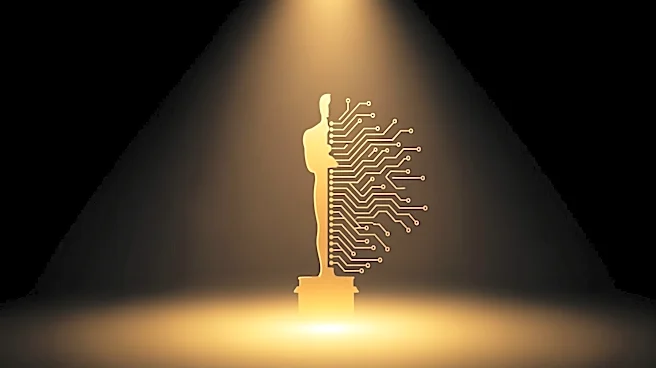
The Academy of Motion Picture Arts and Sciences has announced new rules for the 99th Academy Awards, focusing on the use of artificial intelligence in film production. The updated guidelines require that
screenplays be 'human-authored' and that acting performances be 'demonstrably performed by humans with their consent' to qualify for awards. This move comes as AI tools like voice cloning and digital doubles become more prevalent in the industry. The academy aims to maintain a commitment to human authorship and artistry while reflecting the current state of filmmaking. These changes build on previous guidance that AI use would not affect a film's nomination chances, emphasizing the importance of human involvement in creative authorship.
Why It's Important?
The new rules highlight the growing influence of AI in the film industry and the need to define the boundaries of creative authorship. By emphasizing human involvement, the academy seeks to preserve the integrity of artistic contributions in filmmaking. This decision could impact how films are produced and evaluated, potentially influencing industry standards and practices. It also reflects broader societal concerns about the role of AI in creative fields and the importance of recognizing human contributions in an increasingly automated world.
What's Next?
The academy's decision may prompt other film and entertainment organizations to reevaluate their own guidelines regarding AI use. As the industry continues to adapt to technological advancements, further discussions and adjustments to rules and standards are likely. Filmmakers and studios may need to consider how they incorporate AI into their projects while ensuring compliance with these new regulations. The ongoing evolution of AI technology will likely lead to continued scrutiny and potential updates to industry practices.