








What's Happening?
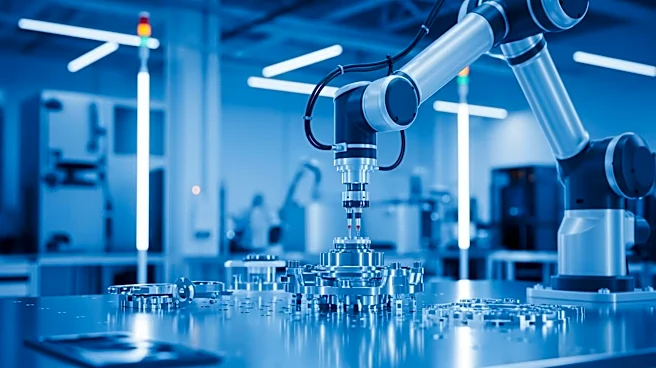
Jeff Bezos, the former CEO of Amazon, has announced his role as co-CEO of a new startup named Prometheus, which focuses on 'physical AI'. This term refers to the application of deep learning principles, commonly used in large language models and generative
AI, to fields such as robotics and manufacturing. Prometheus has recently secured a significant funding round of $12 billion, following an initial $6.2 billion round last year, bringing its valuation to $41 billion. The funding comes from major financial institutions including JPMorgan Chase, Goldman Sachs, and BlackRock, along with substantial personal investment from Bezos. The startup, which currently employs 150 people, plans to use much of this funding to acquire computational resources necessary for its operations. Bezos has described the company's mission as creating an 'artificial general engineer' to accelerate the invention process, drawing parallels to historical innovations like the plow and steam engine.
Why It's Important?
The development of Prometheus and its focus on 'physical AI' could have significant implications for the U.S. manufacturing and robotics industries. By leveraging advanced AI technologies, Prometheus aims to enhance productivity and innovation, potentially leading to economic growth and increased competitiveness in these sectors. The substantial investment from prominent financial institutions underscores the confidence in the potential impact of Prometheus' technology. If successful, the startup could revolutionize how industries approach automation and engineering, leading to more efficient production processes and new technological breakthroughs. This could benefit a wide range of stakeholders, from manufacturers seeking to optimize operations to consumers who may experience improved products and services.
What's Next?
As Prometheus continues to develop its technology, the next steps will likely involve scaling its operations and further refining its AI models. The company may also seek to establish partnerships with other firms in the robotics and manufacturing sectors to integrate its solutions into existing systems. Additionally, the startup's progress will be closely watched by industry analysts and competitors, who may respond by accelerating their own AI initiatives. Regulatory bodies might also take an interest in the implications of such advanced AI technologies, potentially leading to discussions on ethical and safety standards in AI-driven manufacturing.