






What's Happening?
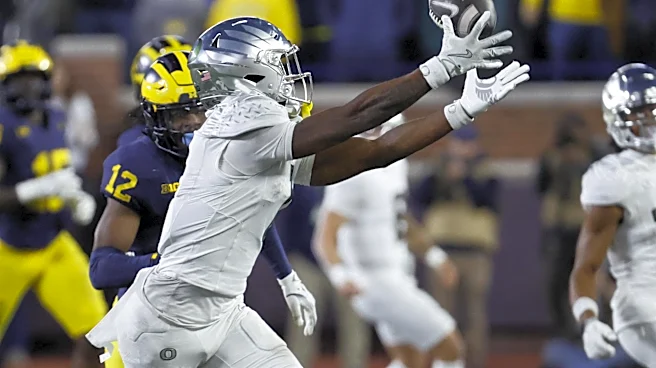
The Oregon Ducks have successfully secured an official visit from Damani Warren, a four-star wide receiver in the 2027 class, marking a significant development in their recruiting efforts. Warren, ranked as the No. 4 player in Nevada and the No. 54 receiver nationally,
had initially planned visits with the USC Trojans and UCLA Bruins. However, he has now switched these visits to include the Michigan Wolverines and the Oregon Ducks. This change is seen as a strategic win for Oregon, as it not only attracts a top recruit but also diverts him from their recruiting rival, USC. The Ducks, under head coach Dan Lanning, are building a strong 2027 recruiting class, currently ranked in the top 10 nationally. This move is part of a broader effort to enhance their recruiting standing and compete more effectively with USC, who have been leading in the recruitment of several key players.
Why It's Important?
This development is crucial for the Oregon Ducks as it strengthens their recruiting position against the USC Trojans, a major rival. Securing a visit from a high-profile recruit like Damani Warren not only boosts Oregon's potential talent pool but also signals to other recruits the program's growing appeal. The Ducks' ability to attract top talent is vital for maintaining competitiveness in college football, particularly in the highly competitive Pac-12 Conference. For USC, losing a potential recruit to Oregon highlights the intensifying competition between the two programs. This rivalry could influence future recruiting strategies and decisions, impacting the balance of power in college football recruiting.
What's Next?
As the recruiting season progresses, both Oregon and USC will continue to vie for top recruits, with each visit and commitment potentially shifting the dynamics of their recruiting classes. Oregon will aim to capitalize on this momentum by impressing Warren during his visit and securing his commitment. Meanwhile, USC will likely intensify their efforts to retain their recruiting edge and prevent further losses to Oregon. The outcome of these recruiting battles will have long-term implications for both programs' competitiveness and success on the field.