





What's Happening?
Cobra AERO and PteroDynamics have announced a partnership to develop a hybrid-electric propulsion system for the P5 Transwing unmanned aircraft system (UAS). This collaboration focuses on integrating Cobra AERO's A99HF-EPU, a compact, liquid-cooled electric power
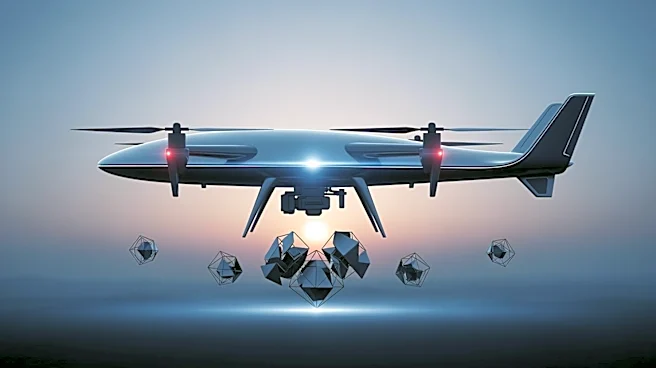
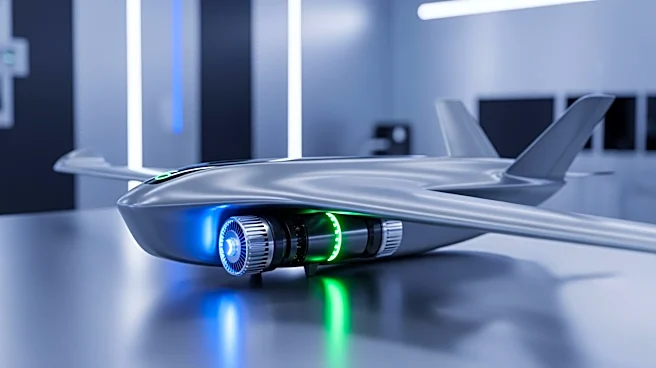
unit designed to perform efficiently in challenging environments. The P5 Transwing, an autonomous vertical takeoff and landing aircraft, will benefit from this propulsion system, which uses a distributed array of propellers for lift and thrust. This design allows for optimized efficiency and reduced drag by enabling flexible placement of the electric power unit within the aircraft's fuselage. The propulsion system aims to enhance the aircraft's performance in both military and civilian applications, particularly in contested maritime environments.
Why It's Important?
The development of a hybrid-electric propulsion system for the P5 Transwing UAS represents a significant advancement in unmanned aerial technology. By improving fuel efficiency and reducing thermal and acoustic signatures, this system enhances the operational capabilities of the aircraft, making it suitable for a variety of applications, including autonomous logistics in challenging environments. The collaboration between Cobra AERO and PteroDynamics highlights the growing trend towards sustainable and efficient propulsion solutions in the aerospace industry. This partnership not only aims to improve the performance of the P5 Transwing but also sets a precedent for future innovations in unmanned systems, potentially influencing the broader market for hybrid-electric aircraft.
What's Next?
The partnership between Cobra AERO and PteroDynamics is currently focused on system integration, controls validation, and test planning. The companies plan to begin flight demonstrations of the integrated P5 platform in the fourth quarter of 2026. These demonstrations will be crucial in validating the performance and reliability of the hybrid-electric propulsion system. Success in these tests could lead to broader adoption of similar technologies in other unmanned systems, further advancing the capabilities of autonomous aircraft in various sectors, including defense and commercial logistics.