






What's Happening?
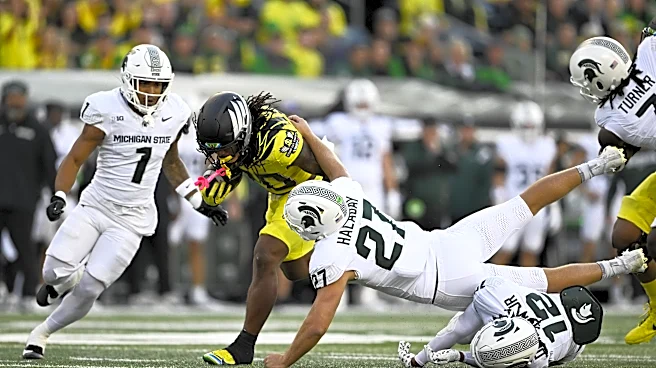
The Oregon Ducks are hosting a surplus sale of team-issued gear, including rare and limited-edition Nike items, at the Moshofsky Center next to Autzen Stadium. This event, scheduled for May 2, has sparked a debate about the potential value of such memorabilia
in the current Name, Image, and Likeness (NIL) era. Darren Rovell, a collectibles expert and founder of Cllct, argues that Oregon is leaving significant revenue on the table by not fully capitalizing on the market for game-used items. He suggests that the university could enhance its financial gains by better productizing these items, which are highly coveted due to their exclusivity and association with the Nike brand.
Why It's Important?
The surplus sale underscores the evolving landscape of college sports memorabilia, particularly in the context of NIL regulations. As universities navigate the complexities of monetizing player-related merchandise, the Oregon Ducks' approach could serve as a model or cautionary tale for other institutions. The potential financial benefits of optimizing memorabilia sales are significant, offering schools a new revenue stream that could support athletic programs and player compensation. This development also highlights the growing intersection of sports, business, and fan engagement, as collectors and fans seek authentic, exclusive items.
What's Next?
The outcome of the Oregon Ducks' surplus sale may influence how other universities approach similar events. If successful, it could prompt schools to reevaluate their strategies for selling game-used items, potentially leading to more structured and profitable sales. Additionally, the conversation around NIL and memorabilia could drive policy changes or new partnerships aimed at maximizing the financial benefits for both schools and athletes. Stakeholders, including athletic directors and collectors, will likely monitor the results closely to inform future decisions.