


What's Happening?
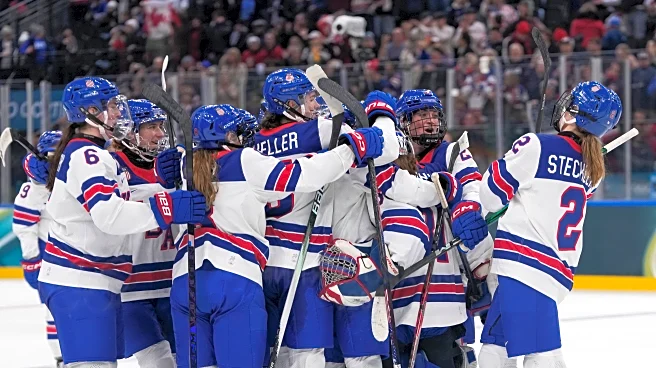
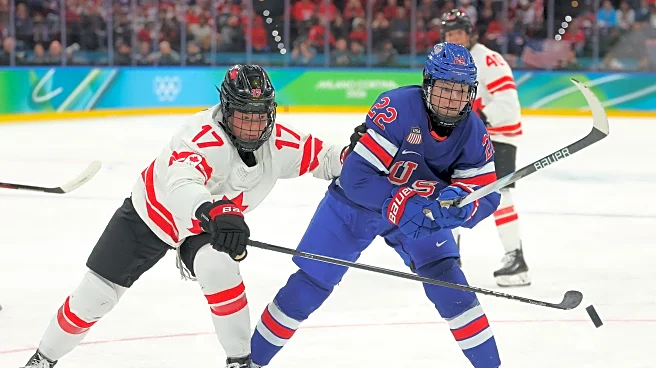
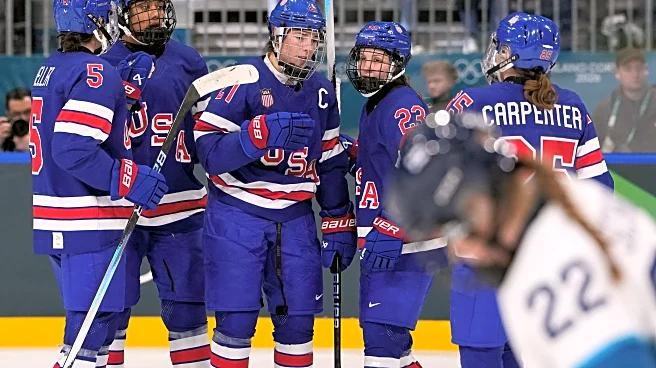
The United States women's hockey team secured their third Olympic gold medal by defeating Canada 2-1 in a thrilling overtime match at the Milan Cortina Games. Megan Keller scored the decisive goal 4:07 into overtime, breaking a tie that was forced by American captain Hilary Knight. Knight, participating in her fifth and final Olympics, tipped in a shot from Laila Edwards to equalize the game with just over two minutes remaining in regulation. The victory marks another chapter in the intense rivalry between the U.S. and Canada in women's hockey. The U.S. team, under coach John Wroblewski, showcased a dominant performance throughout the tournament, going undefeated and outscoring opponents 33-2. This win adds to their previous gold medals from the 1998
Nagano Games and the 2018 Pyeongchang Games.
Why It's Important?
This victory is significant as it highlights the strength and resilience of the U.S. women's hockey team, which has undergone significant changes since their last Olympic appearance. The team featured a mix of experienced players and newcomers, including seven college athletes, demonstrating the depth of talent in U.S. women's hockey. The win also underscores the ongoing rivalry with Canada, a team that has historically been a dominant force in women's hockey. For Canada, this loss represents a shift as their aging core, led by Marie-Philip Poulin, faces the challenge of maintaining their competitive edge. The U.S. victory not only boosts national pride but also emphasizes the importance of investing in women's sports and supporting the development of future athletes.
What's Next?
Following this victory, the U.S. women's hockey team will likely focus on maintaining their momentum and preparing for future international competitions, including the World Championships. The team's success may inspire increased support and funding for women's hockey programs across the United States, encouraging more young women to participate in the sport. For Canada, this loss may prompt a reevaluation of their team strategy and player development programs as they aim to reclaim their position at the top of women's hockey. Both teams will continue to be key players in the international hockey scene, with their rivalry expected to fuel further competitive matches.