








What's Happening?
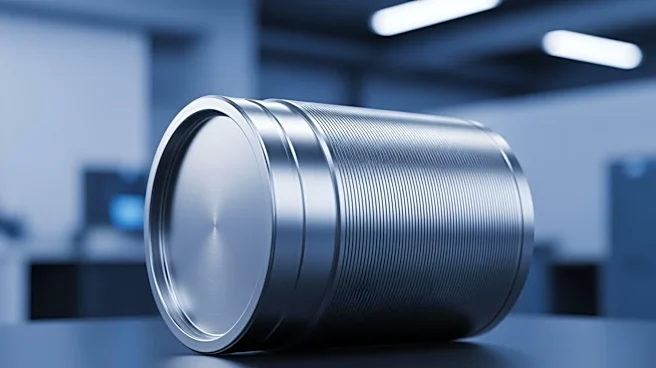
Scientists at the U.S. Department of Energy’s Oak Ridge National Laboratory (ORNL) in Tennessee have developed a new method using Additive Manufacturing (AM) to produce custom canisters for Powder Metallurgy Hot Isostatic Pressing (PM-HIP). This innovation
aims to streamline the production of large-scale metal components used in aerospace, energy, and medical applications. Traditionally, PM-HIP canisters are manufactured through multiple stages, including metal forming, machining, and welding, which can introduce defects and increase costs. The ORNL team has utilized AM to fabricate canisters, allowing for complex geometries tailored to the final component, reducing manufacturing stages, material waste, and lead times. The process involves filling the canister with metal powder, vacuum sealing, and subjecting it to high temperature and pressure to form a dense metal component. This method is expected to provide greater design freedom and expand applications in hydropower and next-generation nuclear reactors.
Why It's Important?
The development of this AM method for PM-HIP canisters is significant as it offers an alternative to traditional casting and forging processes, potentially strengthening U.S. manufacturing and national security by easing supply chain shortages. The ability to produce complex geometries with reduced material waste and shorter lead times can enhance the efficiency and cost-effectiveness of manufacturing large-scale metal components. This innovation could lead to improved control over internal material structures and properties, such as enhanced corrosion resistance and high-temperature stability, which are crucial for demanding aerospace and energy applications. Additionally, the method supports the production of advanced alloys with specific properties, including radiation resistance for nuclear applications, thereby broadening the scope of materials that can be used in critical industries.
What's Next?
ORNL researchers are developing computational models to predict shrinkage and distortion during the PM-HIP process, aiming to reduce uncertainties in predicting dimensional changes during consolidation. This could further minimize development costs and lead times by reducing trial-and-error approaches. The ongoing research builds on previous PM-HIP projects at ORNL, including the rapid production of a hydropower impeller canister prototype. The laboratory continues to engage with stakeholders through workshops to discuss challenges and opportunities in PM-HIP production, indicating a commitment to advancing this technology and its applications.