
What's Happening?
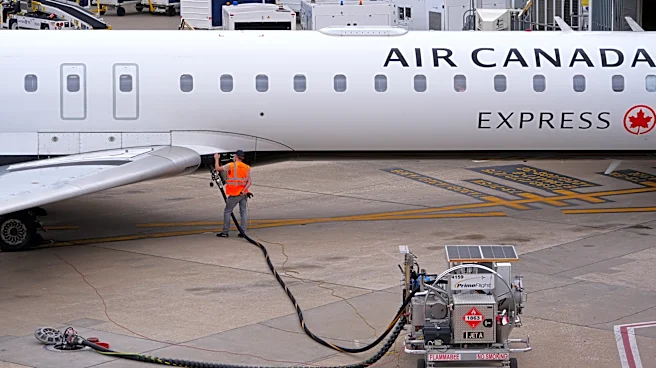
Air Canada has announced the suspension of its flights to New York's JFK International Airport from June 1 to October 25, citing soaring jet fuel costs as a result of the ongoing conflict in Iran. The
airline will continue its services to LaGuardia and Newark airports, maintaining 34 flights a day from six Canadian cities. The decision comes as jet fuel prices have doubled since the onset of the Iran conflict, making some routes economically unviable. The average price for a gallon of jet fuel has risen to $4.32, up from $2.50 before the conflict. The International Energy Agency has warned that Europe may have only six weeks of jet fuel supplies left, highlighting the severity of the global energy crisis.
Why It's Important?
The suspension of flights by Air Canada underscores the broader impact of geopolitical tensions on global air travel and the economy. The sharp increase in jet fuel prices is forcing airlines to reassess their routes and operational costs, potentially leading to higher airfares and reduced service availability. This situation affects not only airlines but also passengers and the broader travel industry, which may see decreased demand and increased operational challenges. The energy crisis, exacerbated by the closure of the Strait of Hormuz, is a critical issue that could have long-term implications for global trade and economic stability.
What's Next?
Airlines are likely to continue adjusting their schedules and pricing strategies in response to fluctuating fuel costs. The reopening of the Strait of Hormuz may provide some relief, but the situation remains volatile. Airlines may explore alternative fuel sources or routes to mitigate the impact of the crisis. Additionally, diplomatic efforts to stabilize the region and secure energy supplies will be crucial in determining the future landscape of international air travel.