







What's Happening?
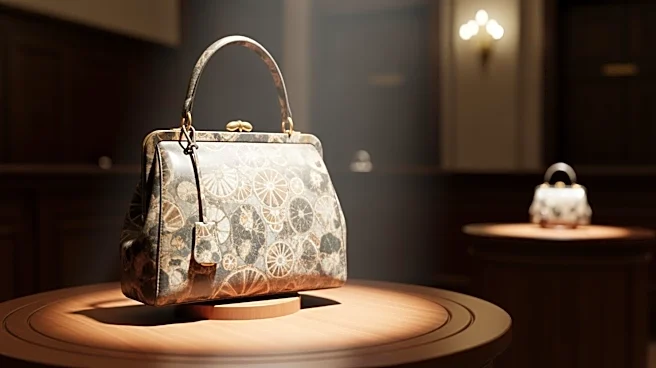
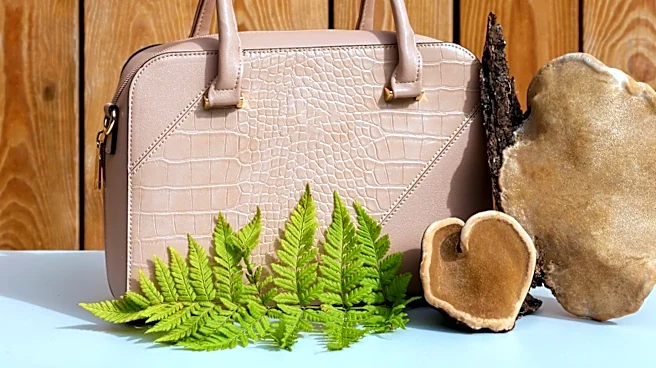
A unique leather handbag, reconstructed from Tyrannosaurus rex cells, failed to sell at an auction in Paris. The auction, held by Drouot, saw the handbag's price not exceed 150,000 euros, despite an initial valuation of 300,000 euros. The handbag, unveiled
in Amsterdam months prior, was created using collagen remnants from a T-Rex femur discovered in Montana, USA, 25 years ago. The auction house described the handbag as an unprecedented luxury item and a scientific feat, as it was made without relying on animal husbandry. The material, termed 'cellular leather,' is distinct from vegan leather, as it originates from a cell culture, making it 100% skin from an animal extinct for 67 million years.
Why It's Important?
The failure to sell the handbag at its estimated value underscores the challenges in the luxury market for novel and scientifically advanced products. This event highlights the potential disconnect between innovative luxury items and consumer readiness or willingness to invest in such products. The use of cellular leather represents a significant advancement in biotechnology, offering a sustainable alternative to traditional leather. However, the market's response suggests that while the technology is groundbreaking, consumer acceptance and valuation may lag behind. This could impact future investments and developments in similar biotechnological innovations within the luxury goods sector.
What's Next?
The auction's outcome may prompt a reassessment of marketing strategies for biotechnological luxury items. Stakeholders in the luxury goods industry might need to focus on educating consumers about the benefits and uniqueness of cellular leather. Additionally, further research and development could be directed towards reducing production costs to make such items more accessible. The auction house and creators may also explore alternative markets or platforms where there is a higher appreciation for scientific and technological innovations in luxury goods.
Beyond the Headlines
The creation of cellular leather from dinosaur cells raises ethical and cultural questions about the use of extinct species in modern products. It challenges traditional notions of luxury, which often rely on rarity and exclusivity derived from natural resources. This development could lead to a broader discussion on the role of biotechnology in redefining luxury and sustainability. It also poses questions about the preservation of extinct species' integrity and the potential for similar technologies to be applied in other industries, such as fashion and conservation.