
What's Happening?
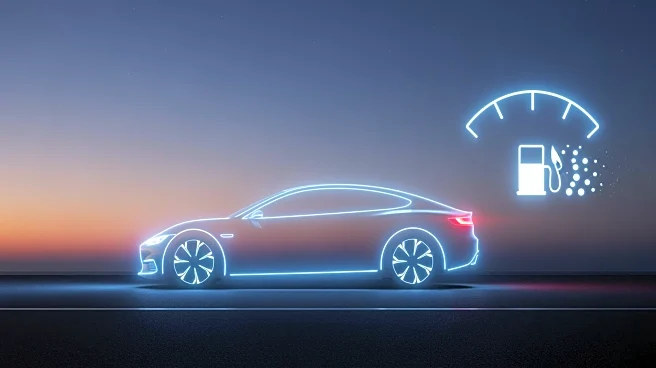
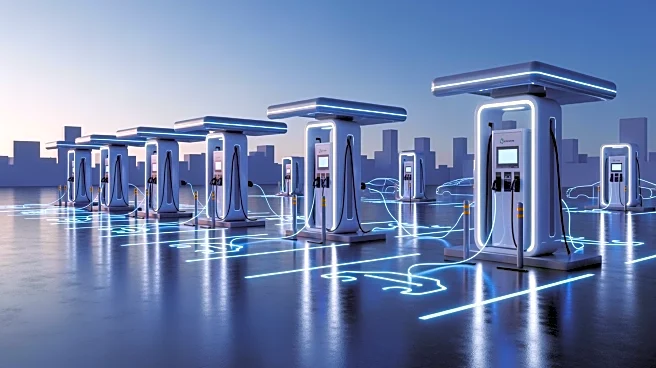
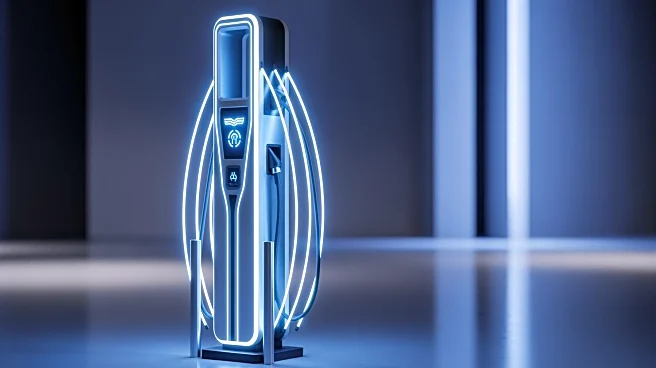
Tesla has announced the launch of its new V4 Supercharger stations, marking a significant upgrade from the previous V3 models. These new stations are capable of delivering up to 500 kW of power to individual vehicles, with the Tesla Semi able to receive
up to 1.2 MW. This development represents a substantial increase from the earlier 50 kW chargers, highlighting Tesla's commitment to advancing electric vehicle infrastructure. The V4 Superchargers also feature a unique foldable design, allowing for more efficient transport and installation. This design innovation enables 33% more units to fit on a delivery truck, reduces installation costs by 20%, and doubles the speed of deployment. The Supercharger network remains a critical asset for Tesla, facilitating the adoption of electric vehicles by providing accessible and efficient charging solutions.
Why It's Important?
The introduction of the V4 Supercharger stations is a pivotal development in the electric vehicle industry, as it addresses key challenges related to charging infrastructure. By significantly increasing the power output and improving the efficiency of station deployment, Tesla is enhancing the feasibility and convenience of electric vehicle ownership. This move is likely to accelerate the adoption of electric vehicles, as faster and more accessible charging options become available. The foldable design not only reduces logistical costs but also demonstrates Tesla's innovative approach to solving practical challenges in the EV market. As more automakers produce electric vehicles compatible with Tesla's Supercharger network, the impact of these advancements will extend beyond Tesla owners, potentially influencing the broader automotive industry.
What's Next?
With the rollout of the V4 Supercharger stations, Tesla is expected to continue expanding its charging network globally. This expansion will likely involve strategic partnerships with other automakers and infrastructure providers to enhance the accessibility and coverage of the Supercharger network. Additionally, as the demand for electric vehicles grows, Tesla may further innovate its charging technology to accommodate future needs, such as even faster charging times and integration with renewable energy sources. Stakeholders in the automotive and energy sectors will be closely monitoring these developments, as they could influence market dynamics and regulatory policies related to electric vehicle infrastructure.