
What's Happening?
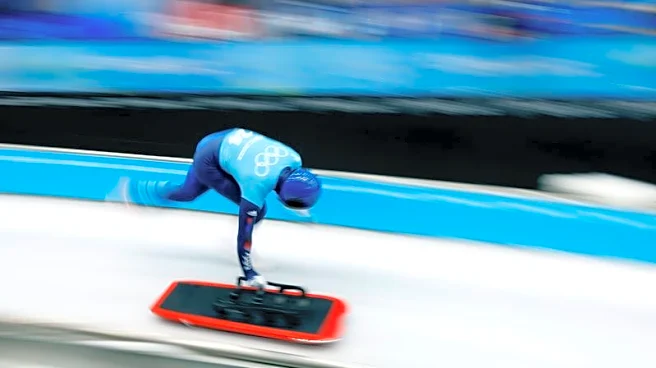
The sport of luge, a staple of the Winter Olympics, involves athletes racing down an icy track at speeds reaching 90 mph. This high-speed event is performed either solo or with a teammate, requiring competitors
to navigate a series of sharp turns over a lengthy track. The sport is known for its thrilling and dangerous nature, as highlighted by the tragic death of Georgian Olympian Nodar Kumaritashvili during a practice run at the 2010 Vancouver Games. Recently, Team Latvia shared a first-person video showcasing the intense experience of a luge run, providing viewers with a glimpse into the adrenaline-pumping reality faced by these athletes.
Why It's Important?
Luge is a testament to the skill and bravery of Winter Olympic athletes, who must master the art of controlling their sleds at high speeds. The sport's inherent risks underscore the importance of safety measures and training in high-stakes athletic competitions. The video shared by Team Latvia not only highlights the thrilling nature of luge but also serves as a reminder of the potential dangers involved. This exposure can influence public perception and appreciation of the sport, potentially impacting its popularity and the support it receives from sponsors and fans.
What's Next?
As the Winter Olympics continue, athletes and teams will likely focus on enhancing safety protocols and training methods to mitigate risks associated with high-speed sports like luge. The sharing of first-person experiences may also lead to increased interest and viewership, as audiences seek to understand the athlete's perspective. Additionally, discussions around safety improvements and technological advancements in sled design may gain traction, aiming to protect athletes while maintaining the sport's thrilling appeal.
Beyond the Headlines
The luge event at the Winter Olympics highlights broader themes of risk and reward in sports. It raises questions about the balance between maintaining the excitement of high-speed events and ensuring athlete safety. The sport's evolution may also reflect cultural attitudes towards risk-taking and the value placed on athletic achievement. As technology advances, there may be opportunities to enhance safety without compromising the sport's integrity, potentially setting precedents for other high-risk sports.