







What's Happening?
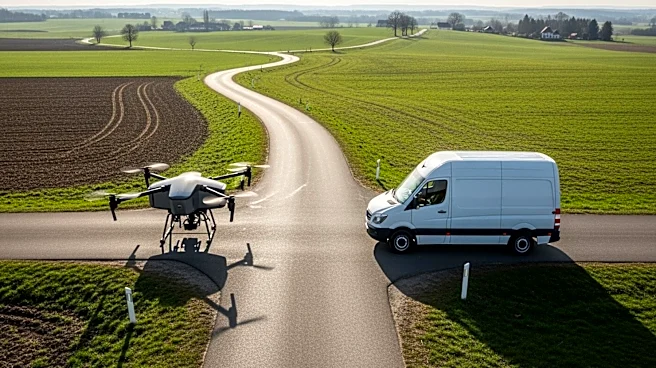
Walmart and Amazon are intensifying their efforts to capture the rural American market by enhancing their delivery speeds. This competition arises as traditional delivery services like FedEx, UPS, and the United States Postal Service (USPS) reduce or slow
down their services in rural areas to cut costs and focus on more profitable ventures. Walmart, with a significant presence in rural areas, is leveraging its physical stores to enhance delivery efficiency, while Amazon is investing heavily in technology and infrastructure to improve delivery times. Amazon has committed $4 billion to expand same-day or next-day deliveries to smaller cities and rural communities, using artificial intelligence to forecast demand and establishing micro hubs in these areas. This strategic move is part of a broader effort to tap into the rural market, which is estimated to be worth up to $1 trillion annually.
Why It's Important?
The push by Walmart and Amazon to dominate the rural delivery market highlights a significant shift in retail dynamics, driven by changing demographics and the increasing economic potential of rural areas. As more people move to small towns and remote areas, the demand for efficient delivery services grows, presenting a lucrative opportunity for retailers. This competition could reshape the retail landscape, forcing traditional delivery services to reconsider their strategies. For rural consumers, this means better access to goods and potentially lower prices due to increased competition. However, it also raises questions about the sustainability of such rapid delivery models and their impact on local businesses and employment.
What's Next?
As Walmart and Amazon continue to expand their delivery capabilities, other retailers may follow suit, further intensifying competition in rural markets. This could lead to innovations in delivery technology and logistics, as companies strive to meet consumer demands for faster service. Additionally, the reduction of services by traditional delivery companies like USPS and FedEx may prompt regulatory scrutiny or policy changes to ensure that rural communities are not left underserved. The evolving landscape may also encourage local businesses to adopt new technologies to remain competitive.