


What's Happening?
Tesla Inc. is experiencing a significant decline in vehicle registrations in California, with a 24% drop in the first quarter compared to the previous year. This decline is part of a broader trend where electric vehicles (EVs) are losing market share
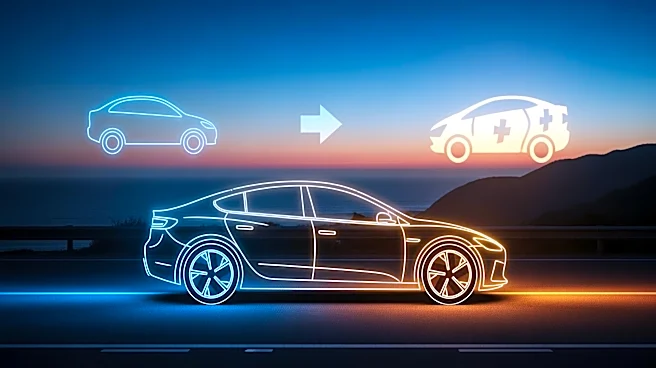
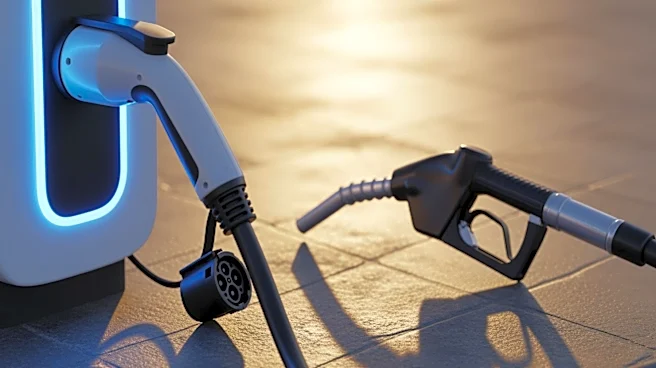
to gas-electric hybrids. In the most recent quarter, hybrids accounted for about 21% of new vehicle registrations, while EVs made up less than 14%. Despite the decline, Tesla's Model Y remains the top-selling vehicle in the state. The shift in consumer preference is attributed to reduced federal incentives for EVs, prompting California Governor Gavin Newsom to introduce $200 million in state subsidies to support the EV market.
Why It's Important?
The decline in Tesla's sales in California highlights a shift in consumer preferences towards hybrid vehicles, which offer a compromise between traditional gasoline and fully electric powertrains. This trend could impact the broader EV market, as California is a key market for electric vehicles. The reduction in federal incentives for EVs has made hybrids more attractive to consumers, potentially slowing the transition to fully electric vehicles. This shift could affect Tesla's market strategy and influence other automakers' approaches to vehicle electrification. The state's response, including subsidies, underscores the importance of policy support in driving EV adoption.
What's Next?
Tesla and other automakers may need to adjust their strategies to address the growing popularity of hybrid vehicles. This could involve introducing more hybrid models or enhancing the appeal of EVs through technological advancements and cost reductions. California's continued support for EVs through subsidies and incentives will be crucial in maintaining momentum towards electrification. The state's policies could serve as a model for other regions looking to balance environmental goals with consumer preferences. The automotive industry will closely monitor these developments to adapt to changing market dynamics.