



What's Happening?
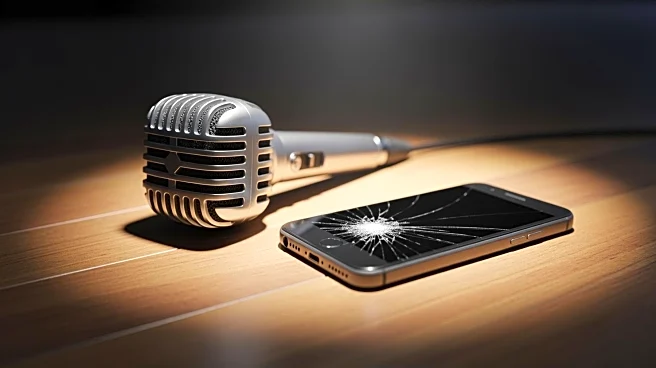
Country singer Riley Green was struck in the face by a cell phone thrown from the audience during his performance at Margaret Court Arena in Melbourne, Australia. The incident occurred on March 14, causing a brief halt in the show as Green was hit near
his ear, resulting in blood running down his neck. Crew members quickly attended to him, wiping away the blood. Despite the injury, Green addressed the audience with humor, stating, 'Y’all see how tough I am?' The fan responsible for the incident was removed from the venue. Green later shared the incident on his Instagram, including a fan-captured video and photos of medics tending to his injury. He resumed and completed his performance, refusing to let the incident derail the concert. The Melbourne show was part of Green's Australian tour, which included a surprise appearance by Randy Houser.
Why It's Important?
This incident highlights a troubling trend of concertgoers throwing objects at performers, posing safety risks to artists. Such actions can disrupt performances and potentially cause serious injuries. The incident with Riley Green is part of a broader pattern affecting various artists across genres, including Bebe Rexha and Harry Styles. These occurrences raise concerns about concert security and the need for stricter measures to protect performers. For artists, maintaining safety while engaging with fans is crucial, and incidents like this could lead to changes in how concerts are managed. The music industry may need to address these issues to ensure the safety of both performers and audiences.
What's Next?
Riley Green is set to continue his Australian tour with upcoming shows in Sydney and a co-headlining performance at CMC Rocks QLD in Ipswich. The incident may prompt discussions among concert organizers and venues about enhancing security measures to prevent similar occurrences. Artists and their management teams might also consider implementing stricter protocols to ensure safety during live performances. The music industry could see increased collaboration between artists, venues, and security professionals to address these challenges and protect performers from potential harm.