







What's Happening?
Epic Group, a Hong Kong-based global apparel company, has inaugurated its first manufacturing unit in India, located at the Kalibeti Industrial Estate in Odisha's Khurda district. The facility, known as the Trimetro manufacturing campus, was developed
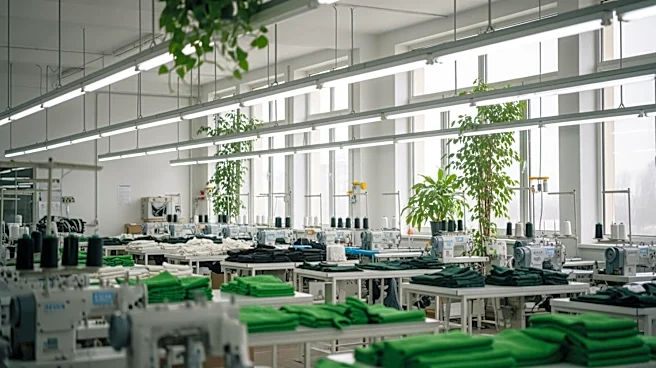
with an investment of $100 million and began production just 15 months after its foundation stone was laid. This state-of-the-art facility is notable for being India's first fully net-zero carbon and net-zero water garment production site. It is expected to create approximately 10,000 jobs, with a significant focus on employing women. The campus spans 40 acres and features 32 production lines across two complexes, making it Epic Group's largest production unit in India. The facility aims to produce 20 million garments annually for international brands, positioning Odisha as a key player in the global textile and apparel supply chain.
Why It's Important?
The opening of Epic Group's facility in Odisha represents a significant development in the global apparel industry, particularly in terms of sustainable manufacturing practices. By focusing on net-zero carbon and water usage, the facility sets a benchmark for environmentally responsible industrialization. The project is also crucial for local economic development, as it promises to generate thousands of jobs, predominantly for women, thereby contributing to gender equality and economic empowerment in the region. Additionally, the facility's focus on exporting garments to international markets underscores India's growing role in the global apparel supply chain. This development could attract further investment in the region, enhancing its economic profile and potentially leading to more sustainable industrial projects.
What's Next?
Epic Group plans to continue expanding its operations in India, with another unit under development in Gujarat through a joint venture with Creative Group. The company is also likely to focus on training local workers to equip them with skills necessary for global competition. As the facility ramps up production, it will be interesting to observe how it influences the local economy and whether it inspires similar sustainable manufacturing projects in India and beyond. The success of this facility could also encourage other global apparel companies to invest in sustainable practices, potentially leading to a broader industry shift towards environmentally friendly manufacturing.