



What's Happening?
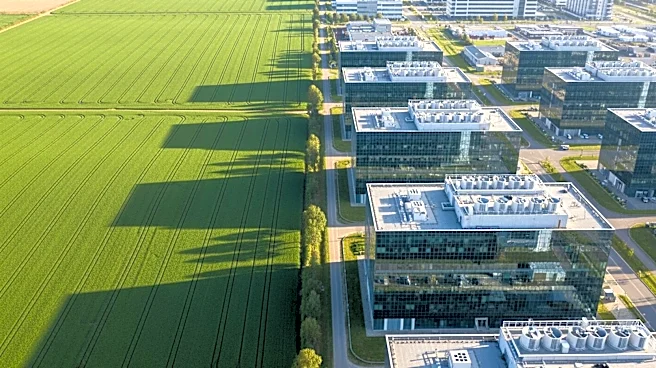
The expansion of data centers across the United States is creating both opportunities and challenges for rural communities. These facilities, essential for cloud computing and digital services, require significant land, water, and energy resources. As
of now, there are approximately 4,925 active or under-construction data centers in the U.S. The construction of these centers involves substantial investments, with costs ranging from $9 million to $15 million per megawatt. While they bring economic benefits such as jobs and infrastructure improvements, they also pose a threat to agricultural land, as farmland conversion is often permanent. The American Farm Bureau Federation emphasizes the need for balanced policies and local engagement to ensure that rural communities benefit from these developments without compromising agricultural viability.
Why It's Important?
The growth of data centers is a reflection of the increasing demand for digital infrastructure, driven by advancements in technology and the proliferation of digital services. However, this expansion poses a risk to agricultural land, which is vital for food production and rural economies. The permanent conversion of farmland for data center use could have long-term implications for food security and the agricultural sector. Balancing the economic benefits of data centers with the preservation of agricultural land is crucial for sustainable development. Policymakers and community leaders must work together to create strategies that support both technological advancement and agricultural sustainability.
What's Next?
As data center development continues, stakeholders will need to engage in discussions about land use policies and the allocation of resources. Local governments and agricultural organizations may advocate for regulations that protect farmland while accommodating the growth of digital infrastructure. The implementation of such policies could involve zoning laws, incentives for sustainable development, and community engagement initiatives. The outcome of these efforts will likely influence the future landscape of rural areas and the balance between technological and agricultural priorities.