
What's Happening?
Japanese startup Fermelanta has developed a groundbreaking microbial platform capable of producing rare plant compounds by introducing an unprecedented number of genes into a single bacterial cell. The
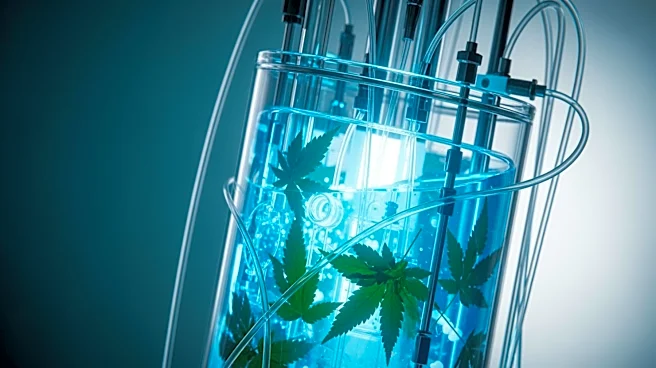
company, founded in 2022, leverages over 20 years of academic research to engineer E. coli strains that can efficiently produce complex plant metabolites. This innovation allows for the production of essential medicines, flavors, fragrances, and supplement ingredients that were previously difficult to manufacture. Fermelanta's approach involves inserting nearly 30 genes into a single strain, streamlining the fermentation process and enabling the production of complex molecules that were not feasible before. The company is focusing on essential medicines like morphine but is also open to collaborations in food, nutraceuticals, and cosmetics markets.
Why It's Important?
Fermelanta's technology represents a significant advancement in the production of rare plant compounds, potentially transforming industries reliant on these ingredients. By using fast-growing E. coli strains, the company offers a cost-effective and efficient alternative to traditional plant cell cultures, which are slow and expensive. This innovation could lower production costs and increase accessibility to natural solutions across various sectors, including pharmaceuticals, food, and cosmetics. The ability to produce complex molecules at scale may lead to new market opportunities and collaborations, driving growth and innovation in these industries.
What's Next?
Fermelanta plans to expand its focus beyond essential medicines to include rare flavors, fragrances, and supplement ingredients. The company is open to partnerships with external entities in food, nutraceuticals, and cosmetics to explore market opportunities using its technology platform. As Fermelanta continues to refine its microbial platform, it may attract interest from major stakeholders seeking natural and cost-effective solutions for their products. The company's success could inspire further research and development in microbial fermentation, potentially leading to new breakthroughs in the production of rare plant compounds.