




What's Happening?
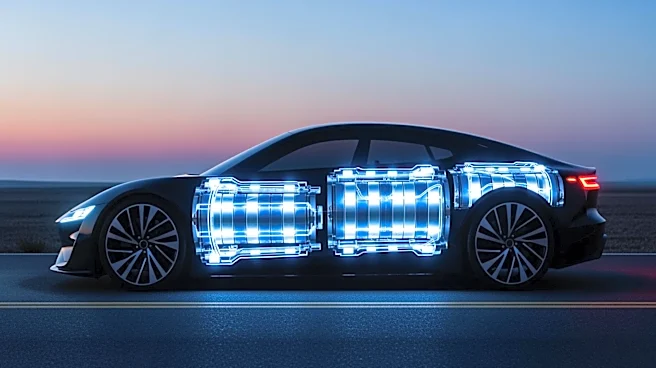
Stellantis has initiated a road-testing program for solid-state batteries in a Dodge Charger Daytona, marking a significant advancement in battery technology. The prototype vehicle is equipped with a solid-state battery developed by Factorial, featuring
an energy density of 375 watt-hours per kilogram and the ability to recharge from 15 to 90 percent in just 18 minutes. This development is part of Stellantis's broader strategy to integrate advanced battery technologies into its vehicles, with the potential to enhance energy efficiency and reduce charging times. The testing program, which began in 2026, represents a step towards bringing solid-state batteries closer to production reality.
Why It's Important?
The introduction of solid-state batteries in the automotive industry could revolutionize electric vehicles by offering higher energy density and faster charging capabilities compared to traditional lithium-ion batteries. Stellantis's testing program is a critical step in validating the performance and safety of these batteries in real-world conditions. Successful integration of solid-state batteries could position Stellantis as a leader in electric vehicle technology, potentially influencing industry standards and consumer expectations. The technology promises to address key challenges in the EV market, such as range anxiety and long charging times, thereby accelerating the adoption of electric vehicles.
What's Next?
Stellantis will continue its road-testing program to evaluate the performance and reliability of the solid-state batteries under various conditions. The company has not specified a timeline for when these batteries might be available in production vehicles, but several automakers aim to introduce solid-state batteries by 2030. The success of this program could lead to broader adoption of solid-state technology across Stellantis's vehicle lineup, potentially influencing other manufacturers to follow suit. As the testing progresses, Stellantis will likely refine the battery design and integration process to ensure safety and durability, paving the way for future advancements in electric vehicle technology.