
What's Happening?
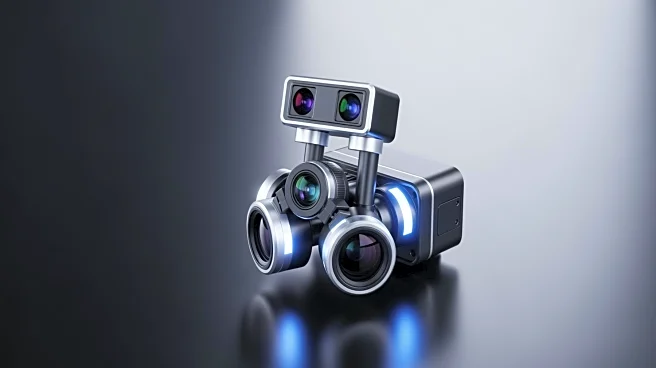
Ouster, a company specializing in lidar technology, has acquired StereoLabs, a firm known for its vision-based perception systems used in robotics and industrial applications. The acquisition, valued at $35 million and 1.8 million shares, is part of a broader trend of consolidation among perception sensor suppliers. This move follows Ouster's previous mergers, including its 2022 merger with Velodyne and the acquisition of Sense Photonics in 2021. The consolidation is driven by a growing interest in 'physical AI,' which encompasses technologies like humanoid robotics, drones, and automated systems. Ouster's CEO, Angus Pacala, emphasized the strategic importance of integrating StereoLabs' camera technology with lidar to create a comprehensive
sensing and perception platform.
Why It's Important?
The acquisition of StereoLabs by Ouster highlights the increasing importance of integrated sensor technologies in the development of advanced robotics and AI systems. As industries move towards automation, the demand for sophisticated perception systems that can accurately interpret and interact with the environment is growing. This consolidation trend is likely to streamline the supply chain, reduce costs, and accelerate innovation in the field of 'physical AI.' Companies that can offer comprehensive solutions combining multiple sensor modalities are well-positioned to lead in the development of next-generation autonomous systems, impacting sectors such as manufacturing, logistics, and transportation.
What's Next?
Ouster plans to operate StereoLabs as a wholly owned subsidiary, focusing on integrating its camera technology with Ouster's lidar systems. This integration aims to enhance the capabilities of autonomous systems by providing more accurate and reliable data for decision-making processes. The company is also likely to explore further acquisitions to strengthen its position in the sensor market. As the demand for 'physical AI' continues to grow, Ouster's strategic moves could set a precedent for other companies in the industry, potentially leading to more mergers and acquisitions in the sensor technology space.