






What's Happening?
The Federal Reserve has decided to keep interest rates unchanged, leading to stable U.S. Treasury yields. The yield on the 10-year Treasury note, a key benchmark for various loans, was slightly down at 4.382%. The 2-year Treasury note yield, which is
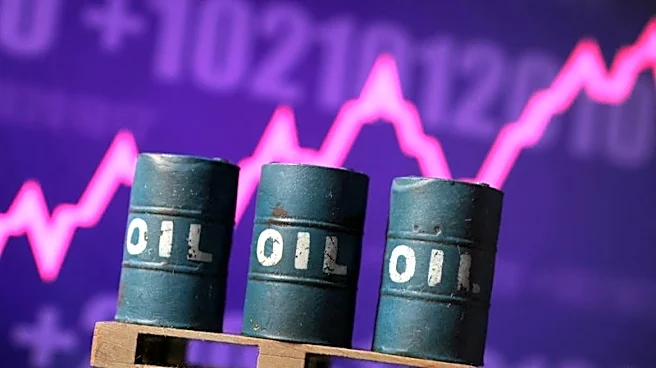
more sensitive to Federal Reserve policy, also decreased to 3.877%. This decision comes as the Commerce Department reported a 2% growth in the first-quarter GDP, which was below Wall Street's expectations of 2.2%. The personal consumption expenditures price index, the Fed's preferred inflation measure, rose by 0.7% in March, aligning with forecasts. Core PCE, excluding food and energy, increased by 0.3% from February and 3.2% year-over-year. Meanwhile, energy prices saw a decline after an initial surge, with Brent crude dropping to $114.01 per barrel.
Why It's Important?
The Federal Reserve's decision to maintain interest rates reflects a cautious approach amid mixed economic signals. The lower-than-expected GDP growth suggests potential vulnerabilities in the economy, possibly influenced by geopolitical tensions, such as the ongoing conflict in the Middle East. Stable Treasury yields indicate investor confidence in the Fed's current monetary policy, despite inflationary pressures. The steady rates could benefit borrowers by keeping loan costs manageable, but they also highlight the challenges in achieving robust economic growth. The energy market's volatility, with fluctuating oil prices, further complicates the economic landscape, impacting both consumer prices and business costs.
What's Next?
Looking ahead, the Federal Reserve will likely continue to monitor economic indicators closely, particularly inflation and GDP growth, to determine future rate adjustments. The ongoing geopolitical tensions, especially concerning Iran, could influence global oil prices and, consequently, inflation. Investors and policymakers will be watching for any shifts in the Fed's stance, which could affect financial markets and borrowing costs. Additionally, the upcoming economic data releases will provide further insights into the health of the U.S. economy and guide future monetary policy decisions.