



What's Happening?
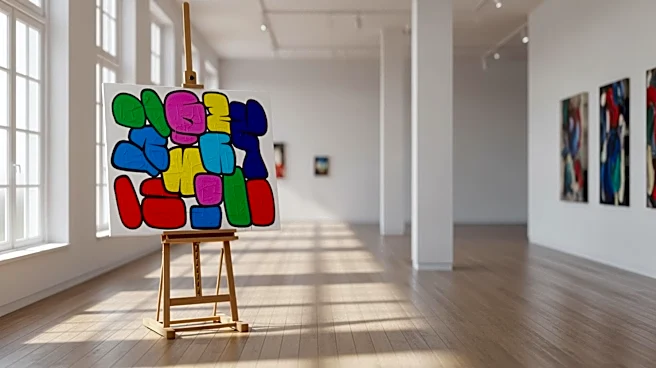
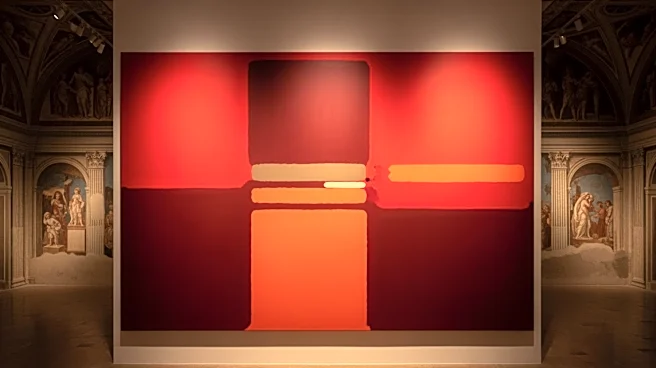
The Palazzo Strozzi in Florence is hosting a new exhibition titled 'Rothko in Florence,' which explores the impact of the Tuscan city and its art on American artist Mark Rothko. The exhibition, co-curated by Rothko's son Christopher, features 70 works
from private collections and major museums, including New York's Museum of Modern Art and the Tate in London. The exhibition is spread across three locations, with the majority of works displayed at the Palazzo Strozzi. Rothko's paintings are shown alongside early Renaissance works, creating a dialogue between his abstract art and the spiritual intensity of Fra Angelico's frescoes. The exhibition aims to highlight Rothko's creative evolution and his preoccupation with space, inspired by the masters of the Italian Renaissance.
Why It's Important?
This exhibition offers a unique perspective on Rothko's work by placing it in the context of the Italian Renaissance, providing insights into his artistic influences and evolution. By showcasing his paintings alongside Renaissance masterpieces, the exhibition emphasizes the timeless nature of Rothko's art and its ability to evoke deep emotional responses. This approach not only enriches the understanding of Rothko's work but also enhances the cultural dialogue between American and European art. The exhibition's success could influence future curatorial practices, encouraging more thematic and cross-cultural exhibitions that explore the interconnectedness of different art movements.
Beyond the Headlines
The exhibition's thematic focus on space and spirituality invites viewers to consider the broader implications of Rothko's work in contemporary art. By drawing parallels between Rothko's abstract forms and Renaissance art, the exhibition challenges traditional notions of art history and encourages a reevaluation of Rothko's place within it. This approach highlights the enduring relevance of Rothko's work and its capacity to transcend cultural and temporal boundaries. Additionally, the exhibition's setting in Florence, a city rich in artistic heritage, underscores the importance of location in shaping artistic narratives and experiences.