
What's Happening?
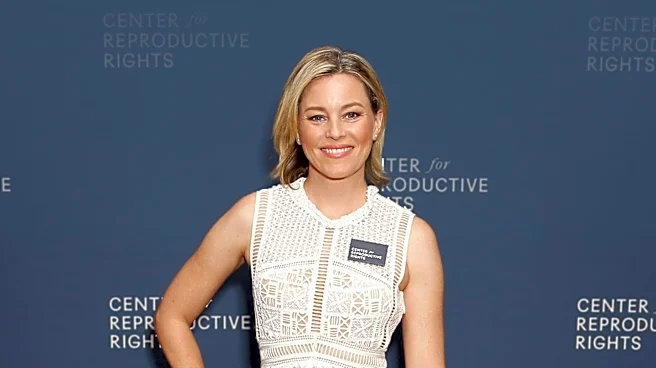
Elizabeth Banks, known for her roles in 'The Hunger Games' and 'Pitch Perfect,' is actively advocating for women's health and reproductive rights. She has partnered with Cadence OTC, a company that provides
over-the-counter access to emergency contraception and urinary tract infection relief. Banks, who is also an investor in the company, is using her platform to address the disparities in women's health care access. During a recent conversation, she highlighted the challenges women face in obtaining birth control, especially in areas with strict abortion laws and limited maternal health care support. Banks shared her personal experiences with health care access, emphasizing the need for systemic change to empower women.
Why It's Important?
The advocacy by Elizabeth Banks is significant as it brings attention to the ongoing challenges in women's health care, particularly in the wake of the Supreme Court's decision in Dobbs v. Jackson, which overturned Roe v. Wade. This decision has led to stricter abortion laws in several states, exacerbating the difficulties women face in accessing reproductive health services. Banks' efforts aim to address these issues by promoting over-the-counter solutions and increasing accessibility in health care deserts. Her involvement underscores the broader societal need to ensure equitable health care access for women, which is crucial for their autonomy and well-being.
What's Next?
Cadence OTC is working with the FDA to make birth control pills available over-the-counter, which would significantly improve access for women across the United States. This initiative could lead to a shift in how reproductive health care is approached, potentially reducing the barriers women face in obtaining necessary health services. As discussions around women's health continue to gain momentum, there may be increased pressure on policymakers to address these disparities and improve health care infrastructure, particularly in states with restrictive laws.
Beyond the Headlines
The broader implications of Banks' advocacy highlight the cultural and systemic issues surrounding women's health care. Her efforts to change the narrative and language around women's needs reflect a push towards greater empowerment and recognition of women's rights. This movement could lead to long-term shifts in how society views and addresses women's health, potentially influencing future legislation and health care policies to be more inclusive and supportive of women's needs.