



What's Happening?
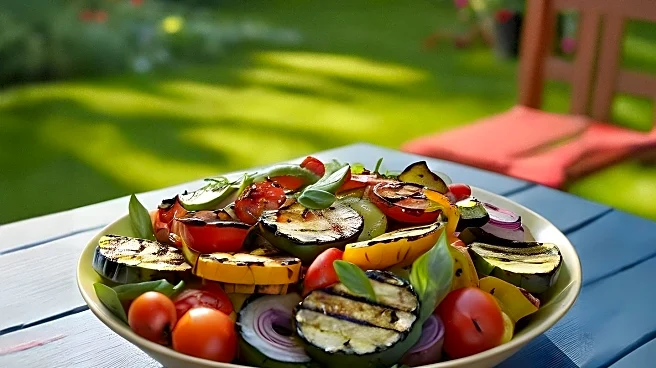
Cookbook author Colu Henry is offering insights into spring entertaining, emphasizing a shift from heavy winter meals to lighter, fresher dishes. In her latest cookbook, 'Better at Home,' Henry shares recipes that celebrate the season's produce, such
as a shaved asparagus salad with Comté cheese, toasted almonds, and fried prosciutto, as well as harissa and brown sugar salmon. Henry describes her approach to spring dining as a return to simplicity, where ingredients shine with minimal preparation. Her entertaining style includes family-style serving and a focus on conviviality, with meals often enjoyed outdoors in the Hudson Valley or Nova Scotia. Henry also suggests pairing meals with wines from the Willamette Valley or non-alcoholic options like Mother Root from the UK.
Why It's Important?
Colu Henry's approach to spring entertaining highlights a broader trend towards seasonal and locally-sourced ingredients, reflecting a growing consumer interest in sustainable and health-conscious dining. By focusing on simple, fresh ingredients, Henry's recipes cater to a market increasingly interested in reducing food waste and supporting local agriculture. This shift also aligns with a cultural movement towards more casual, home-based social gatherings, which have become more prevalent in the wake of the pandemic. Henry's emphasis on family-style meals and outdoor dining resonates with those seeking to reconnect with friends and family in a relaxed setting, potentially influencing dining habits and consumer preferences in the U.S.
What's Next?
As spring progresses, there may be increased interest in cookbooks and culinary content that focus on seasonal ingredients and outdoor entertaining. This could lead to a rise in demand for local produce and wines, as well as a boost in sales for cookbooks like 'Better at Home.' Additionally, the trend towards home-based gatherings may continue to grow, influencing the hospitality industry to adapt by offering more take-home meal kits and outdoor dining options. Consumers may also seek out more non-alcoholic beverage options, reflecting a broader shift towards mindful drinking.