





What's Happening?
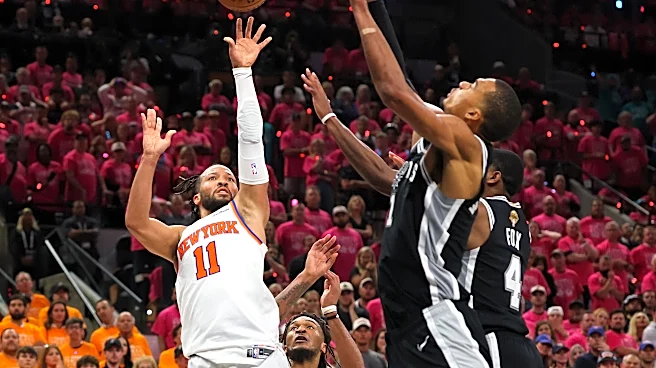
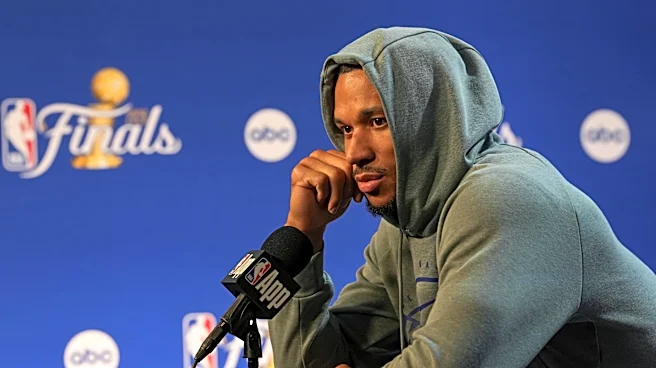
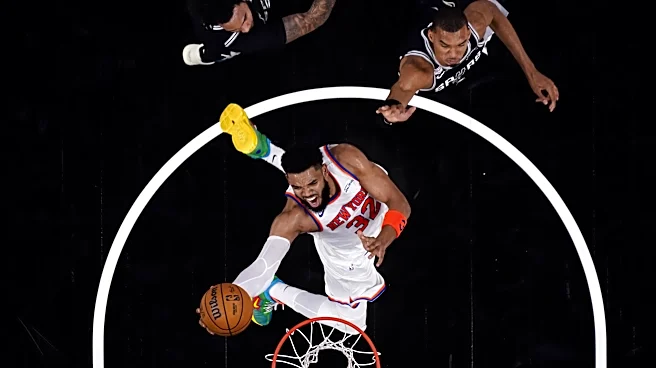
Gregg Popovich, the former head coach of the San Antonio Spurs, has expressed a sense of melancholy over not being able to coach the team in the 2026 NBA Finals against the New York Knicks. Popovich, who suffered a stroke in November 2024, stepped down
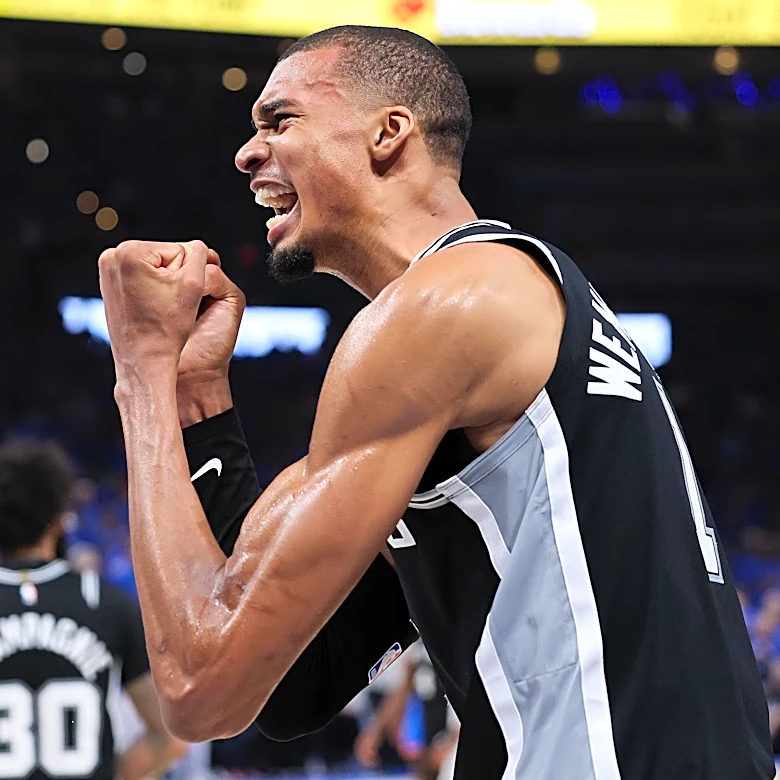
from his coaching role and transitioned to the position of President of Basketball Operations. Despite his absence from the sidelines, Popovich remains actively involved in the team's strategy and operations. The Spurs, led by Victor Wembanyama, are currently down 2-0 in the series. Popovich's legacy with the Spurs includes five NBA championships, and he continues to influence the team's play through his strategic insights.
Why It's Important?
Popovich's absence from the coaching role highlights the impact of leadership changes on team dynamics and performance. His continued involvement in the Spurs' strategy underscores the importance of experienced leadership in sports. The situation also reflects broader themes of resilience and adaptation, as Popovich navigates his health challenges while maintaining a significant role within the organization. The Spurs' performance in the finals could influence future team strategies and player development, particularly for emerging talents like Wembanyama. Popovich's legacy and influence remain pivotal as the team seeks to reclaim its championship status.
What's Next?
The Spurs will need to make strategic adjustments to overcome their current deficit in the finals. Popovich's insights and experience will likely play a crucial role in guiding these changes. The team's ability to adapt and respond to the Knicks' strategies will be critical in determining the outcome of the series. Additionally, Popovich's health and involvement in the team's future plans may influence the Spurs' long-term strategy and leadership structure. The ongoing finals will serve as a test of the team's resilience and ability to leverage Popovich's expertise despite his absence from the coaching role.
Beyond the Headlines
Popovich's situation raises questions about the role of veteran leadership in sports and the challenges of transitioning from active coaching to an advisory role. It also highlights the personal and professional adjustments required when health issues impact career trajectories. The Spurs' reliance on Popovich's strategic acumen, despite his health challenges, underscores the enduring value of experience and mentorship in sports. This scenario may inspire discussions on how sports organizations can support leaders facing similar transitions and ensure their continued contribution to team success.