








What's Happening?
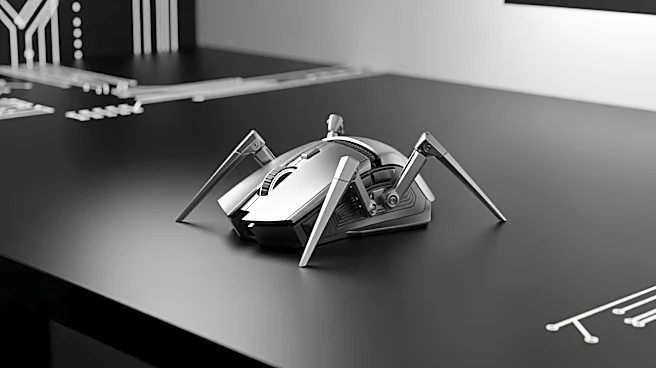
A unique DIY project has emerged in the gaming community, showcasing a custom fingertip mouse that resembles a spider. The creator, known as Pseudoku, shared the design on social media, highlighting its unusual appearance and functionality. The mouse is
constructed using nylon platforms atop the internals of a traditional mouse, allowing users to rest their fingers on the structure. Despite its unconventional look, the mouse is designed to be functional, with step-by-step instructions available for those interested in building their own. The project requires disassembling an existing mouse, specifically the G-Wolves HSK Pro, to utilize its buttons, battery, and sensor. The design is open-sourced on GitHub, where users can download 3D printing files to create the mouse shell and paddles, and adjust the design to fit different hand sizes.
Why It's Important?
This project highlights the growing trend of customization and personalization in the gaming hardware industry. By providing open-source instructions, Pseudoku empowers gamers to create bespoke equipment tailored to their preferences, potentially enhancing their gaming experience. This DIY approach also reflects a broader movement towards sustainability and resourcefulness, as it encourages the repurposing of existing hardware. For the gaming industry, such innovations could inspire manufacturers to offer more customizable products, catering to niche markets and fostering a community-driven approach to product development. Additionally, this project underscores the importance of community sharing and collaboration in advancing technology and design.
What's Next?
As more gamers experiment with custom hardware, there could be an increase in community-driven innovations and shared projects. This might lead to a surge in DIY gaming peripherals, encouraging manufacturers to consider modular designs that allow for easy customization. The gaming community may also see a rise in online platforms dedicated to sharing and collaborating on such projects, further blurring the lines between consumers and creators. Companies might respond by offering kits or components specifically designed for customization, tapping into this growing market of DIY enthusiasts.