



What's Happening?
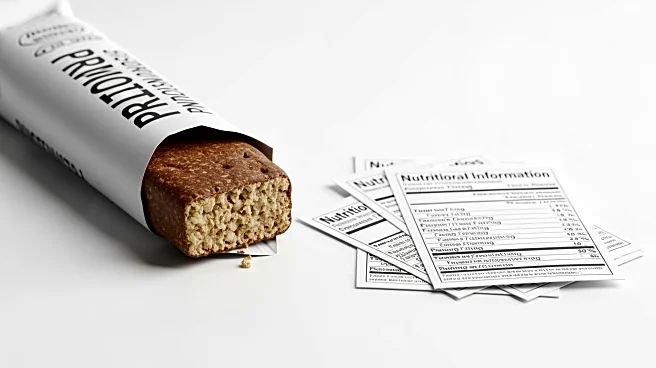
David Protein, a brand known for its high-protein, low-calorie bars, is facing a class-action lawsuit. The lawsuit alleges that the company's products contain significantly more calories and fat than advertised, which could mislead consumers who are trying
to manage their weight. The plaintiffs claim that independent testing revealed the bars have 78% to 83% more calories than stated on their nutrition labels. For instance, the red velvet bar, advertised as having 150 calories and 28 grams of protein, reportedly contains 271 calories. The discrepancy is attributed mainly to fat content, with the label listing 2.5 grams of fat, while testing found 12.2 grams. The lawsuit accuses David Protein's parent company, Linus Technology, of deceptive practices.
Why It's Important?
This lawsuit highlights significant concerns about transparency and accuracy in food labeling, which is crucial for consumers making health-conscious choices. The case underscores the importance of accurate nutritional information, as many consumers rely on these details to manage their diet and health. Misleading labels can lead to overconsumption of calories and fat, contributing to obesity and other health issues. The outcome of this lawsuit could have broader implications for the food industry, potentially prompting stricter regulations and enforcement of labeling standards by the FDA. It also raises awareness among consumers about the potential discrepancies in nutritional information provided by food manufacturers.
What's Next?
If the lawsuit proceeds, it could lead to increased scrutiny of nutritional labels across the food industry. The FDA may face pressure to tighten regulations and ensure compliance with existing standards. For David Protein, the lawsuit could result in financial penalties and a need to reformulate their products or adjust their marketing strategies. The company may also need to engage in public relations efforts to rebuild consumer trust. Other companies in the health food sector might preemptively review their labeling practices to avoid similar legal challenges.