


What's Happening?
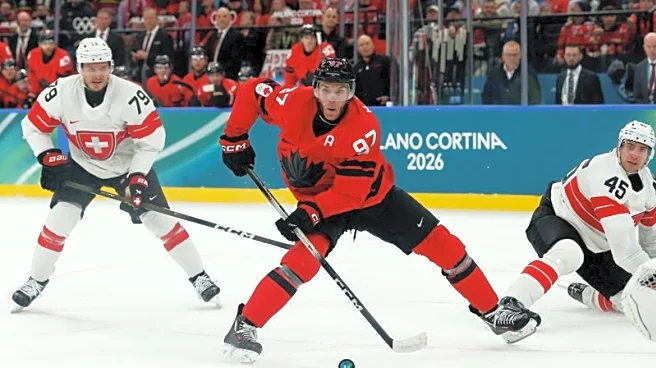
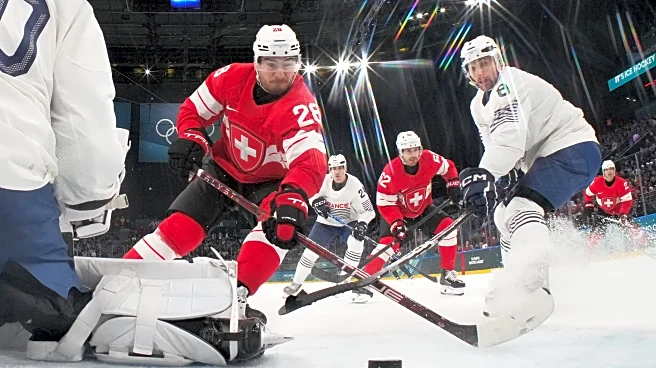
During the 2026 Winter Olympics, Canadian hockey player Tom Wilson was ejected from a game against France after engaging in a fight. The altercation occurred late in the game when Wilson retaliated against Pierre Crinon, who had earlier delivered a forearm hit to Wilson's teammate Nathan MacKinnon. Under international hockey rules, fighting results in a game misconduct, leading to the ejection of both Wilson and Crinon. Despite the ejection, Wilson contributed significantly to the game, scoring a goal and an assist, achieving what is known in hockey as a 'Gordie Howe hat trick.' Wilson, known for his physical style of play, was a strategic pick for the Canadian team, which values his ability to retrieve pucks and his high-level performance with
the Washington Capitals.
Why It's Important?
The incident highlights the ongoing debate about the role of physicality and fighting in hockey, especially in international competitions like the Olympics where rules differ from the NHL. Wilson's ejection underscores the stricter penalties for fighting in international play, which contrasts with the NHL's more lenient five-minute major penalty. This event may influence discussions on whether international hockey should align more closely with NHL standards or maintain its distinct approach. For Canada, Wilson's ejection could impact team dynamics and strategy, as his physical presence and scoring ability are key assets. The incident also reflects the intense competitive nature of Olympic hockey, where national pride and high stakes can lead to heightened emotions and physical confrontations.
What's Next?
Following the ejection, the Canadian team may need to adjust its lineup and strategy to compensate for Wilson's absence in future games. The incident could prompt discussions among international hockey governing bodies about the appropriateness of current rules regarding fighting and physical play. Teams may also review their player selection and training strategies to ensure compliance with international standards while maintaining competitive edge. Additionally, the incident might lead to increased scrutiny of player conduct and officiating in subsequent Olympic matches, potentially influencing future rule changes or enforcement practices.