

What's Happening?
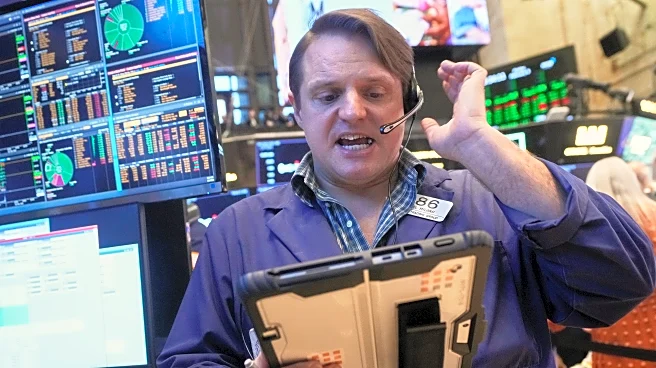
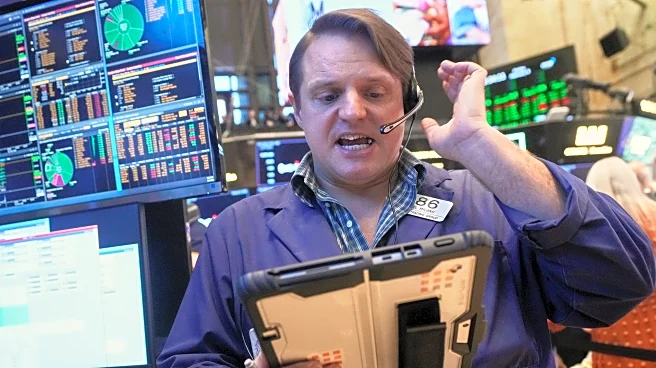
Stocks on Wall Street are experiencing fluctuations due to mixed economic data from the United States. The S&P 500 saw a slight decline of 0.1% in early trading, while the Dow Jones Industrial Average remained flat, and the Nasdaq composite fell by 0.2%. This movement comes as investors await key U.S. employment and inflation reports, which are expected to influence future interest rate decisions. Recent data revealed that the unemployment rate reached its highest level since 2021, although job creation exceeded expectations. Additionally, U.S. retail and restaurant sales remained unchanged in October. These developments have contributed to uncertainty about the Federal Reserve's next steps regarding interest rates.
Why It's Important?
The current economic data
is crucial as it could dictate the Federal Reserve's approach to interest rates, impacting the broader U.S. economy. A potential interest rate adjustment could either stimulate economic growth or exacerbate inflationary pressures. Investors are particularly concerned about the balance between maintaining economic momentum and controlling inflation. The mixed signals from the job market and consumer spending add complexity to the Federal Reserve's decision-making process. Businesses and consumers alike are closely monitoring these developments, as interest rate changes can affect borrowing costs, investment decisions, and overall economic confidence.
What's Next?
The upcoming release of the U.S. employment and inflation reports will be pivotal in shaping market expectations and the Federal Reserve's policy direction. Investors are hoping for a slight weakening in the job market to prompt a reduction in interest rates, without triggering a recession. Additionally, the government's latest retail sales data, expected later this week, will provide further insights into consumer behavior and economic health. These reports will likely influence market volatility and investor sentiment in the short term.