





What's Happening?
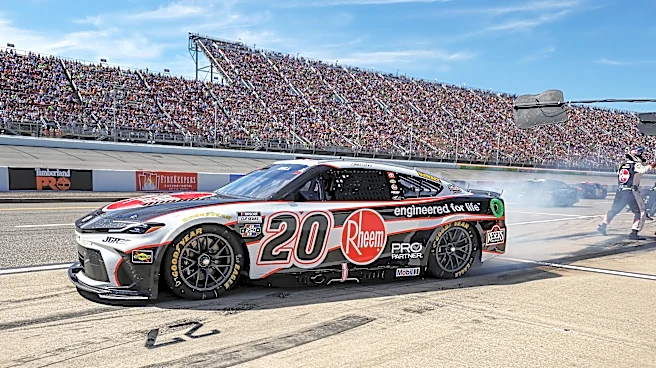
Matt Payne, a prominent Supercars driver, is at the center of a contractual dispute involving his potential participation in a NASCAR Cup Series race. Payne, who races for the Ford-backed Grove Racing team, was reportedly set to make a cameo appearance
with Chevrolet-backed Richard Childress Racing. However, Grove Racing has denied Payne permission to compete, citing a breach of contract due to their Ford affiliation. This decision has sparked significant tension, as Payne had allegedly engaged in simulator testing with Chevrolet in the U.S., which could further complicate his contractual obligations. The situation has drawn attention to the potential for Supercars drivers to transition to NASCAR, following the successful move of Shane van Gisbergen.
Why It's Important?
This development highlights the complexities and competitive nature of motorsport contracts, particularly when drivers are courted by rival manufacturers. The situation underscores the strategic interests of automotive brands in securing top driving talent and the potential conflicts that arise when drivers seek opportunities outside their current affiliations. For Grove Racing, maintaining control over Payne's career trajectory is crucial, as losing him to a competitor could weaken their team. Conversely, for General Motors, acquiring a driver like Payne could bolster their presence in both Supercars and NASCAR. This incident also reflects broader industry trends, where cross-series participation is becoming more common, potentially reshaping driver career paths and team strategies.
What's Next?
The immediate future may involve further negotiations between Grove Racing, Payne, and potentially General Motors, as all parties seek to clarify and resolve the contractual issues. Payne's manager has expressed disappointment over the lost opportunity, suggesting that discussions about his future in NASCAR may continue. Additionally, this situation could prompt other Supercars teams to reassess their contractual terms to prevent similar conflicts. The outcome of this dispute may influence how manufacturers and teams approach driver contracts, especially regarding cross-series participation, and could lead to more stringent clauses to protect team interests.
Beyond the Headlines
This case raises questions about the ethical and legal dimensions of driver contracts in motorsport. The potential breach of contract by Payne, if confirmed, could set a precedent for how such cases are handled in the future. It also highlights the cultural shift in motorsport, where drivers increasingly seek diverse racing experiences across different series. This trend could lead to a reevaluation of traditional career paths in motorsport, encouraging more drivers to explore opportunities beyond their home series. The situation also reflects the growing influence of global motorsport brands in shaping the careers of emerging talents.