






What's Happening?
Netflix has announced an expansion of its partnership with the NFL, adding three regular-season games to its lineup as part of a four-year extension of its league rights deal. This extension will run through the 2029-30 season. The announcement was made
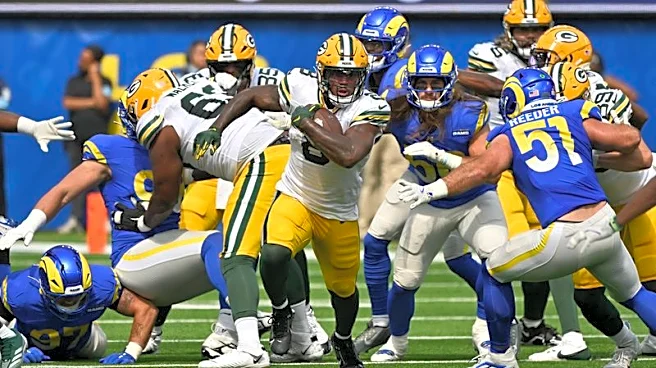
by Netflix's chief content officer, Bela Bajaria, during the company's annual upfront presentation in New York. The new games include a Week 18 matchup on January 9, which is expected to be crucial for playoff berths, and a game between the LA Rams and San Francisco 49ers in Australia on September 10, marking the NFL's first game in the country. Additionally, Netflix will have exclusive rights to a Green Bay Packers vs. LA Rams game at SoFi Stadium on November 25, the night before Thanksgiving. This move is part of Netflix's strategy to enhance its sports content offerings and follows the success of last year's Minnesota Vikings-Detroit Lions game, which became the most-streamed regular-season game in U.S. history.
Why It's Important?
The expansion of NFL games on Netflix signifies a strategic shift for the streaming giant as it seeks to diversify its content offerings and attract a broader audience. By securing more live sports content, Netflix aims to compete with traditional broadcasters and other streaming services that have been investing heavily in sports rights. This move could potentially increase Netflix's subscriber base and engagement, particularly among sports fans. The inclusion of international games, such as the one in Australia, also highlights the NFL's ongoing efforts to expand its global reach and tap into new markets. For the NFL, partnering with a major streaming platform like Netflix provides an opportunity to reach a younger, tech-savvy audience that prefers streaming over traditional TV.
What's Next?
As Netflix integrates more NFL content, it is likely to explore additional opportunities to expand its sports offerings. This could include acquiring rights to other major sports leagues or events, further solidifying its position in the competitive streaming market. The NFL, on the other hand, will continue to evaluate the success of its international games and may consider expanding its global presence further. Stakeholders, including advertisers and sponsors, will be closely monitoring the viewership and engagement metrics of these games to assess the impact of streaming on sports consumption patterns.