




What's Happening?
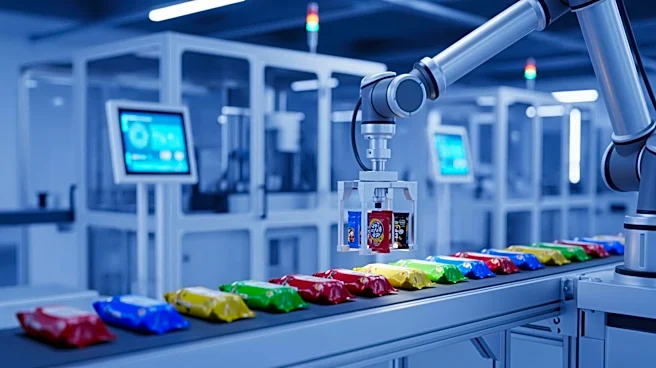
The global snack industry is experiencing a significant transformation, prompting manufacturers to reconsider their production line designs, especially at the end-of-line stage where packaging and case handling occur. This shift is driven by the increasing
complexity of production, with a rise in SKU counts due to diverse product formats like single-serve packs, multipacks, and e-commerce-ready cartons. As a result, production environments must adapt to frequent changeovers, influenced by seasonal launches and evolving retail requirements. Manufacturers are now prioritizing flexibility, uptime, and consistency across multiple packaging formats, with end-of-line automation becoming crucial for overall line performance. Equipment manufacturers are developing systems that automatically adjust to varying case sizes, reflecting a broader industry transition towards more flexible and responsive automation.
Why It's Important?
The shift in the snack industry towards flexible automation is crucial as it addresses the growing complexity and variability in product formats. This transformation impacts manufacturers by necessitating adaptable production systems that can handle frequent changeovers efficiently. The emphasis on flexibility and responsiveness in automation can lead to improved operational efficiency, reduced downtime, and consistent output, which are vital for maintaining competitiveness in a dynamic market. As manufacturers embed flexibility into their core operations, they can better meet consumer demands and adapt to market trends, ultimately enhancing their market position and profitability.
What's Next?
The evolving approach to automation in the snack industry is expected to be a key theme at Interpack 2026, where suppliers will showcase updated end-of-line solutions aimed at improving adaptability and supporting complex packaging workflows. Companies like Endoline Automation are presenting re-engineered systems designed to align with modern production requirements, emphasizing space efficiency, usability, and lifecycle performance. As the industry continues to prioritize flexibility, manufacturers may increasingly adopt these advanced systems to enhance their production capabilities and meet the demands of a rapidly changing market.