
What's Happening?
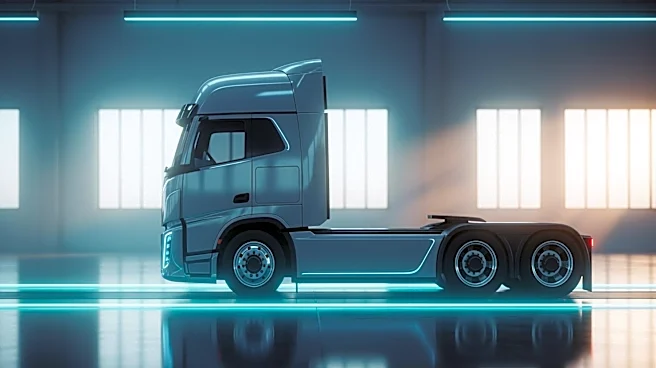
Tesla has completed its first Semi truck at a high-production line, marking a significant milestone in the company's efforts to revolutionize freight transportation. The Tesla Semi, which has been in development
and testing for nearly a decade, is designed to replace traditional diesel trucks that contribute to air pollution and climate change. The new production line is capable of producing 50,000 units annually. Tesla plans to expand its Megacharger network to support these electric trucks, with installations along major transportation routes in California, such as I-5 and I-10. This development is expected to improve air quality by reducing diesel emissions and enhance energy efficiency in freight transport.
Why It's Important?
The introduction of the Tesla Semi is a pivotal step towards reducing the environmental impact of freight transportation in the U.S. Diesel trucks are a major source of air pollution and CO2 emissions, which harm human health and contribute to climate change. By transitioning to electric trucks, Tesla aims to mitigate these issues, offering a cleaner alternative that also boasts greater energy efficiency. This shift could lead to significant improvements in air quality, benefiting public health and aligning with broader environmental goals. Additionally, the expansion of the Megacharger network will facilitate the adoption of electric trucks, potentially transforming the logistics industry and reducing reliance on fossil fuels.
What's Next?
Tesla's focus will likely be on scaling production and expanding the Megacharger network to support the widespread adoption of the Semi. As more companies integrate electric trucks into their fleets, there may be increased pressure on competitors to develop similar technologies. Regulatory bodies might also consider incentivizing the transition to electric freight vehicles to accelerate environmental benefits. Stakeholders, including logistics companies and environmental groups, will be closely monitoring the impact of these developments on air quality and industry practices.
Beyond the Headlines
The shift to electric freight vehicles could have broader implications for the transportation industry, including changes in infrastructure requirements and job roles. As electric trucks become more prevalent, there may be a need for new skills and training for drivers and maintenance personnel. Additionally, the reduction in diesel emissions could lead to improved public health outcomes, particularly in urban areas with high traffic congestion. This transition also aligns with global efforts to combat climate change, potentially influencing international policies and collaborations.