



What's Happening?
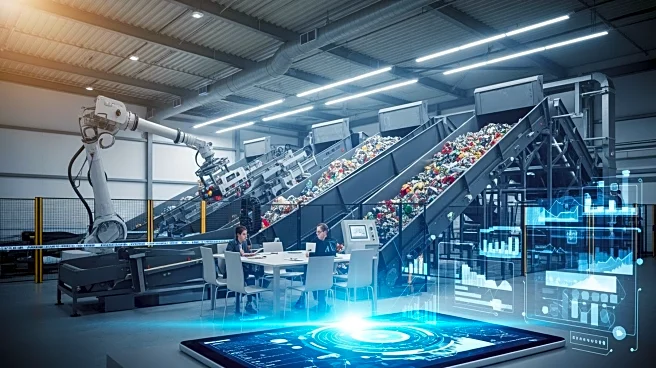
The recycling industry is undergoing significant changes as operations become more digitized and regulations evolve. This shift is prompting companies to reassess their workforce models, which are increasingly seen as outdated. The expansion of core roles now requires employees to be proficient not only in traditional processes and compliance but also in data systems, automation technologies, and circular resource management principles. As responsibilities grow, companies are recognizing the need for strategic reskilling to maintain competitiveness. Leadership plays a crucial role in this transformation, as senior teams are encouraged to integrate skills development into strategic planning and daily operations. Collaboration with training providers
and educational institutions is also emphasized to ensure that reskilling programs align with business needs.
Why It's Important?
The push for workforce reskilling in the recycling sector is critical for maintaining long-term competitiveness and resilience. As the industry becomes more technology-driven, companies that fail to adapt may struggle to keep pace with evolving demands. By investing in structured learning pathways and aligning skill development with business priorities, firms can build a more adaptable and capable workforce. This not only improves employee retention and performance but also enhances the company's ability to respond to industry changes. Moreover, a proactive approach to reskilling supports innovation and growth, positioning companies to succeed in a complex, technology-led economy.
What's Next?
As the recycling sector continues to transform, companies are likely to increase their focus on reskilling initiatives. This may involve expanding partnerships with educational institutions and industry bodies to develop tailored training programs. Additionally, firms may prioritize leadership development to ensure that senior teams are equipped to guide their organizations through change. The emphasis on reskilling is expected to drive internal progression, reducing reliance on external recruitment and fostering a culture of continuous learning. As these efforts take hold, the industry could see a more skilled and adaptable workforce, better prepared to meet future challenges.
Beyond the Headlines
The shift towards reskilling in the recycling industry highlights broader trends in workforce development across various sectors. As technology continues to reshape industries, the need for continuous learning and adaptation becomes increasingly important. This trend underscores the importance of creating a culture that values skill development as an integral part of business operations. By embedding reskilling into the organizational culture, companies can enhance their ability to innovate and remain competitive in a rapidly changing environment. The focus on reskilling also raises questions about the role of leadership in fostering a learning-oriented culture and the potential for new models of workforce development.