



What's Happening?
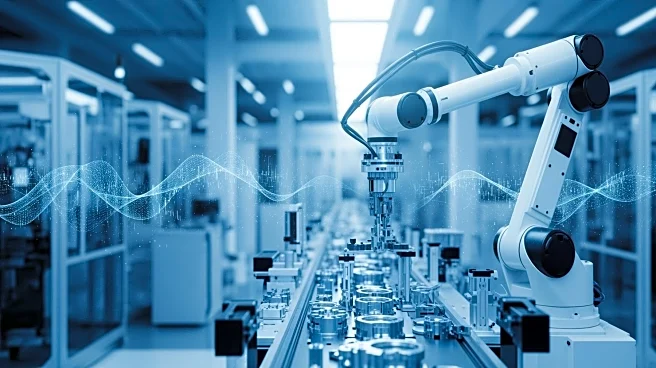
The U.S. industrial sector is making significant strides in AI-driven manufacturing, as highlighted by the Industry 4.0 Barometer 2026. The report, conducted by MHP in collaboration with Prof Dr Johann Kranz from LMU Munich, indicates that the U.S. has
increased its digitalization level to 69%, a 3% rise from previous years. This progress places the U.S. ahead of the UK and the DACH region (Germany, Austria, Switzerland) in terms of digital integration in manufacturing. The study surveyed over 1,200 industrial companies across several countries, including the U.S., China, and India, focusing on the adoption of technologies like digital twins, AI, and Software-Defined Manufacturing (SDM). The U.S. is noted for its rapid implementation of these technologies, which are crucial for maintaining competitiveness in the global market.
Why It's Important?
The advancement in AI-driven manufacturing is crucial for the U.S. as it seeks to maintain its competitive edge in the global industrial landscape. The integration of AI and digital technologies can lead to increased efficiency, reduced costs, and enhanced production capabilities. This progress is vital as countries like China and India are also rapidly advancing in these areas, with China leading in digital twin technology and AI integration. The U.S.'s ability to keep pace with these developments is essential for sustaining its industrial growth and economic stability. Moreover, the focus on digital transformation aligns with broader economic goals of innovation and technological leadership.
What's Next?
The U.S. industrial sector is expected to continue its focus on digital transformation, with increased investments in AI and related technologies. Companies are likely to prioritize the integration of Software-Defined Manufacturing to enhance flexibility and scalability. This strategic shift may involve overcoming technical barriers such as legacy systems and data silos. As the U.S. progresses, it may also influence global standards and practices in industrial manufacturing, potentially leading to new partnerships and collaborations. The ongoing digitalization efforts will require continuous investment and innovation to ensure the U.S. remains at the forefront of industrial advancements.
Beyond the Headlines
The push towards AI-driven manufacturing in the U.S. also raises important considerations regarding workforce adaptation and skills development. As automation and digital technologies become more prevalent, there will be a growing need for workers to acquire new skills and adapt to changing job roles. This transition may require significant investment in education and training programs to ensure the workforce is equipped to handle new technological demands. Additionally, the ethical implications of AI in manufacturing, such as data privacy and security, will need to be addressed to foster trust and acceptance among stakeholders.