
What's Happening?
José Dávila, a Mexican artist known for his exploration of space and positioning, is showcasing his latest work at the Sean Kelly Gallery in New York. The exhibition, titled 'The Simple Act of Positioning,'
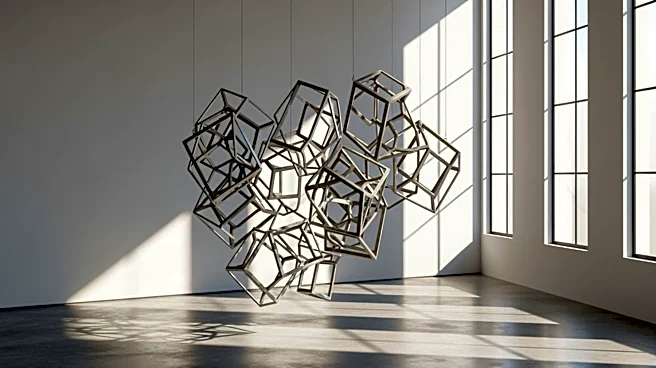
delves into the often-overlooked aspect of sculpture: relational placement. This is Dávila's fifth solo show with the gallery, and it continues his investigation into how the arrangement of elements can create new meanings and tensions. The exhibition features totemic pillars made from materials such as steel I-beams, concrete forms, and volcanic rocks, all accented with automotive paint. These materials are arranged in a way that invites viewers to consider their industrial and natural origins, as well as themes of gravity and mass. Dávila's background in architecture informs his artistic practice, allowing him to transform modernist concepts through a contemporary lens.
Why It's Important?
The exhibition is significant as it challenges traditional perceptions of sculpture by emphasizing the importance of spatial relationships. Dávila's work encourages viewers to engage with art in a dynamic way, moving through the gallery space to fully appreciate the interplay between the sculptures and their environment. This approach not only enriches the viewer's experience but also contributes to ongoing discussions in the art world about the role of space and context in art. By drawing on modernist traditions and incorporating contemporary elements, Dávila's work bridges historical and current artistic practices, offering fresh insights into the nature of physical reality and artistic expression.
What's Next?
The exhibition 'The Simple Act of Positioning' will be on display at the Sean Kelly Gallery in New York until May 30, 2026. As the show continues, it is likely to attract art enthusiasts and critics who are interested in the evolving discourse on sculpture and spatial dynamics. The gallery may host events or discussions to further explore the themes presented in Dávila's work, potentially influencing future exhibitions and artistic practices. Additionally, Dávila's exploration of relational placement could inspire other artists to experiment with space and context in their own work, contributing to a broader movement within contemporary art.