





What's Happening?
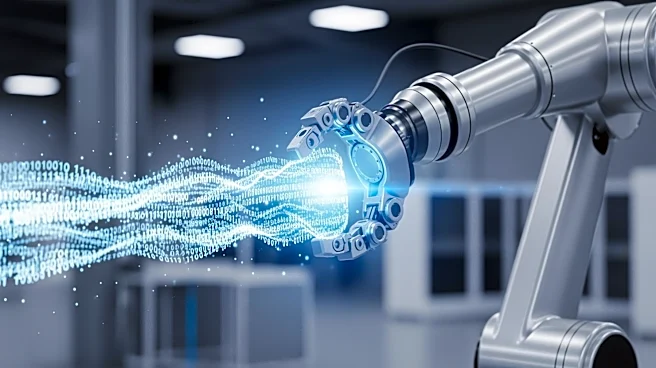
The landscape of factory automation is evolving, with a growing emphasis on software proficiency among workers. As robots become more integrated into production lines, the role of workers is shifting from traditional mechanical tasks to more software-oriented
responsibilities. This change is driven by the need for workers to manage dashboards, updates, alerts, and data-driven decisions. The International Federation of Robotics reports that over half a million industrial robots were installed globally in 2024, highlighting the increasing prevalence of automation. This shift requires workers to interpret workflow data and make informed decisions to prevent production disruptions. The role of a line operator now includes monitoring vibration and temperature readings, cycle-time trends, and error logs, with a focus on software-led responses to potential issues.
Why It's Important?
The transition towards software-centric roles in factory automation underscores the need for a workforce that is adept at handling digital tools and interpreting data. This shift is crucial for maintaining production efficiency and preventing downtime. As automation becomes more widespread, the demand for workers with software literacy will increase, impacting hiring practices and training programs. Companies that invest in upskilling their workforce to handle these new responsibilities will likely see improved productivity and reduced operational risks. The emphasis on software skills also highlights the broader trend of digital transformation across industries, where technology plays a pivotal role in driving business success.
What's Next?
As the demand for software-savvy workers grows, companies are expected to enhance their training programs to include digital confidence alongside traditional robotics training. This may involve practical sessions that simulate real-world scenarios, helping workers develop the skills needed to manage automated systems effectively. Additionally, the integration of cybersecurity measures will become increasingly important as connected robots introduce new vulnerabilities. Manufacturers will need to prioritize cyber hygiene and ensure that their workforce is equipped to handle potential security threats. The ongoing evolution of factory automation will likely lead to further innovations in both technology and workforce management.