


What's Happening?
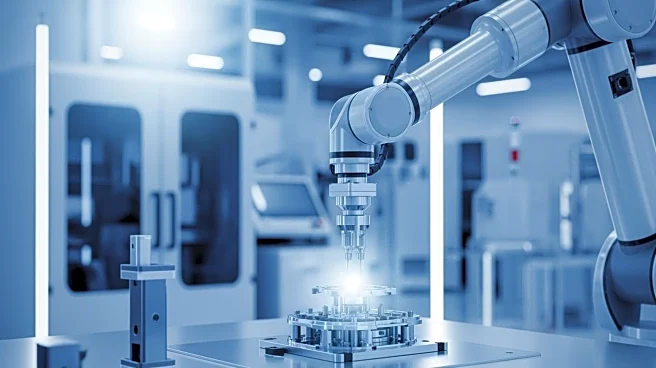
The concept of physical AI is gaining traction as a potential solution to the challenges faced by U.S. manufacturers in reindustrializing and modernizing production facilities. Physical AI integrates real-world physics and spatial dynamics into AI models, enabling machines to interact intelligently with the physical environment. This technology allows manufacturers to simulate processes and environments, potentially reducing the time and cost associated with building new factories or modernizing existing ones. Despite decades of experience, many manufacturers still face significant delays and cost overruns in large capital projects. Physical AI offers a way to address these issues by improving facility planning and commissioning processes.
Why It's Important?
Reindustrialization
is critical for the U.S. economy, particularly in sectors like automotive, industrial equipment, and aerospace. However, the high costs and delays associated with large-scale manufacturing projects pose significant challenges. Physical AI offers a promising solution by enabling more efficient planning and execution of these projects. By simulating production environments, manufacturers can identify potential issues before construction begins, reducing the likelihood of costly rework. This technology could lead to significant cost savings and increased competitiveness for U.S. manufacturers, supporting efforts to rebuild the country's industrial base.
What's Next?
As physical AI technology continues to develop, more manufacturers are likely to adopt it to improve their production capabilities. Early adopters have already reported significant reductions in commissioning times and error detection rates. The continued advancement of physical AI could lead to broader adoption across various industries, further enhancing the efficiency and cost-effectiveness of manufacturing projects. Policymakers and industry leaders may also explore ways to support the integration of physical AI into manufacturing processes as part of broader reindustrialization efforts.