


What's Happening?
The remanufacturing industry is undergoing a transformation driven by advancements in automation, robotics, and artificial intelligence. Traditionally, remanufacturing has been a labor-intensive process, dealing with the variability of used products that
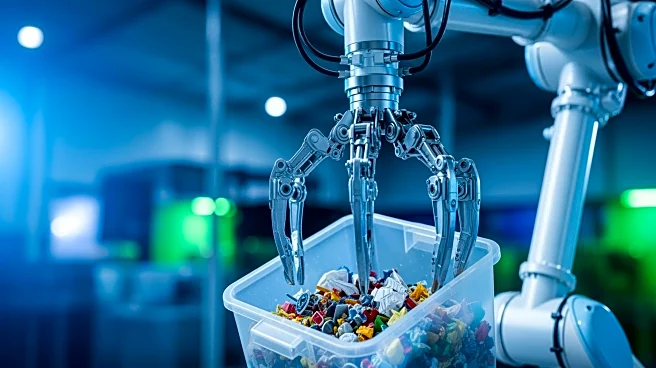
require disassembly, cleaning, inspection, repair, and reassembly. However, new technologies are enabling more efficient and scalable remanufacturing processes. For instance, robotic systems equipped with machine vision are being developed to handle disassembly, while AI-powered inspection systems are improving defect detection. These advancements are particularly significant in sectors like automotive, electronics, and aerospace, where remanufactured components can offer substantial cost savings and environmental benefits. The global automotive remanufacturing market, for example, is valued in the tens of billions of dollars, highlighting the economic potential of this industrial strategy.
Why It's Important?
The shift towards automated remanufacturing is significant for several reasons. Economically, it offers a way to reduce costs associated with raw materials and supply chain disruptions by extending the life of existing products. Environmentally, it addresses the growing issue of e-waste, which reached an estimated 62 million tonnes in 2022, by promoting a more circular economy. This approach not only reduces waste but also lowers energy consumption compared to manufacturing new products. For industries, remanufacturing can provide higher margins by recovering value from used products, creating additional revenue streams while meeting sustainability targets. As companies face increasing pressure to adopt sustainable practices, remanufacturing supported by automation presents a viable solution to balance economic and environmental goals.
What's Next?
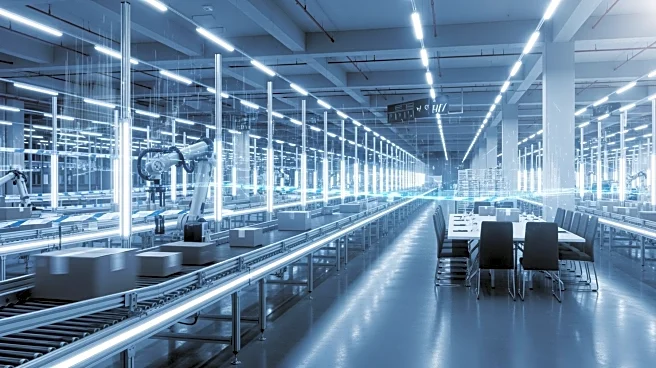
Looking ahead, the integration of remanufacturing into product design is expected to gain traction. Manufacturers are beginning to consider how products can be designed for easier disassembly and reuse, incorporating features like modular architectures and standardized fasteners. This design-for-remanufacturing approach could further enhance the efficiency and scalability of automated remanufacturing processes. Additionally, the development of reverse production lines in factories could transform manufacturing systems, focusing not only on creating new products but also on preserving existing value. As these trends continue, the role of automation in remanufacturing is likely to expand, offering a pathway towards a more sustainable industrial economy.