
What's Happening?
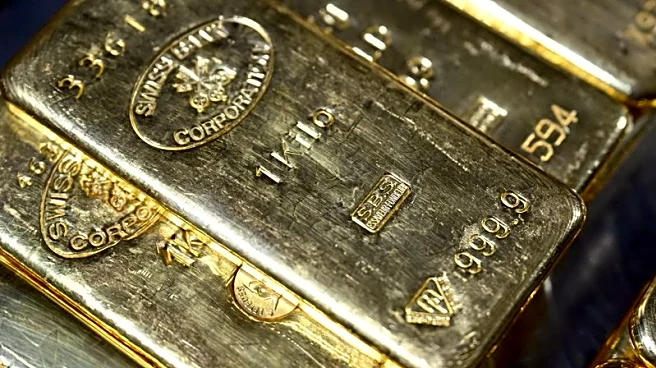
Gold and silver experienced significant losses on Friday, marking their worst performance since the 1980s. The iShares Silver Trust saw a dramatic fall of over 30% during afternoon trading before a slight
recovery. Gold, which had recently surpassed $5,000 per ounce, also faced a substantial dip, with its intraday drop exceeding 10%, the worst since the 1980s and surpassing declines during the 2008 financial crisis. The downturn in these traditional safe-haven assets is attributed to a combination of retail trader enthusiasm, geopolitical risks, and concerns over the dollar's value. Leveraged ETFs holding gold and silver futures have become popular trading vehicles, contributing to the magnitude of the market's reaction.
Why It's Important?
The sharp decline in gold and silver prices highlights the volatility in the commodities market, which can have broader implications for investors and the economy. Precious metals are often seen as a hedge against economic uncertainty, and their downturn could signal shifts in investor sentiment. The involvement of retail traders and the use of leveraged ETFs suggest a changing landscape in how these assets are traded, potentially increasing market volatility. This development could impact financial markets, influencing investment strategies and economic forecasts, particularly if geopolitical tensions or currency concerns persist.
What's Next?
The market will likely monitor the response of investors and financial institutions to this significant drop in precious metals. Analysts may reassess the role of gold and silver as safe-haven assets, considering the influence of retail trading and leveraged ETFs. Future movements in these markets could depend on geopolitical developments, central bank policies, and changes in the global economic outlook. Stakeholders will be watching for any regulatory responses or shifts in trading strategies that could stabilize or further disrupt the market.
Beyond the Headlines
This event underscores the growing impact of retail traders and non-traditional investment vehicles on market dynamics. The use of leveraged ETFs in particular raises questions about market stability and the potential for rapid, large-scale movements in asset prices. As these instruments become more prevalent, there may be calls for increased oversight or regulation to mitigate risks associated with their use. Additionally, the event highlights the interconnectedness of global markets, where geopolitical and economic factors can have immediate and profound effects on asset prices.