


What's Happening?
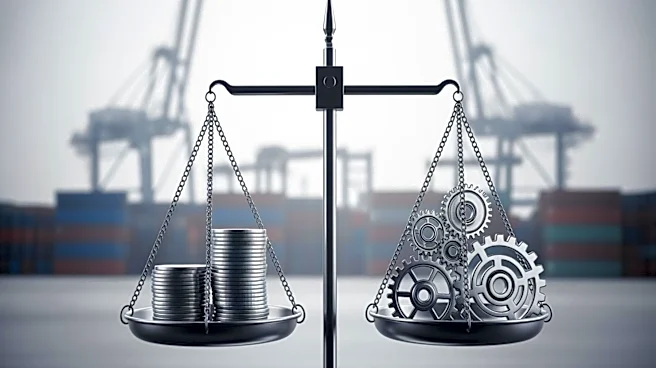
The World Bank has released a comprehensive report advocating for the inclusion of industrial policy in national strategies, marking a significant shift from its previous stance promoting fiscal discipline and market liberalization. This change reflects
the influence of major shareholders like the United States and Western Europe, who have increasingly adopted industrial policies themselves. The report outlines various policy instruments, urging governments to avoid economically costly measures and instead focus on effective tools. Despite acknowledging the challenges governments face in implementing industrial policy, the report suggests that rising global education levels may enhance the ability to execute these policies successfully.
Why It's Important?
This shift by the World Bank highlights a broader trend among developed nations towards embracing industrial policy, which could reshape global economic strategies. The U.S. and European countries have already implemented measures like green subsidies and protectionist tariffs, influencing the World Bank's new approach. This change could lead to increased government intervention in markets, potentially affecting global trade dynamics and economic growth. Developing countries may feel encouraged to adopt similar policies, impacting international competitiveness and economic development. The report's emphasis on education as a factor in successful policy implementation underscores the importance of human capital in economic planning.
What's Next?
As countries consider adopting industrial policies, the effectiveness of these strategies will depend on their ability to navigate political and economic challenges. The World Bank's report serves as a guide for governments, but the real test will be in the execution of these policies. Stakeholders, including businesses and policymakers, will need to collaborate to ensure that industrial policies do not lead to market distortions or inefficiencies. The global economic landscape may see increased competition as countries vie to protect and promote strategic industries, potentially leading to shifts in trade relations and economic alliances.